
From Couch Potato to Marathon Runner: My Transformative Journey
My relationship with running has been a long and winding road, one that started with outright disdain and evolved into an enduring passion. For years, the idea of running for pleasure seemed utterly alien to me. The thought of lacing up shoes and hitting the pavement filled me with dread, not delight. Yet, here I am today, a dedicated runner who has completed numerous full and half marathons, constantly seeking out the next challenge. This isn’t just a hobby; it’s a fundamental part of who I am, a testament to how one pivotal moment can completely alter your life’s trajectory.
The Day Everything Changed: A Brother’s Inspiring Marathon Finish
The catalyst for this profound transformation struck me in 2007, during what I can only describe as a life-changing experience: watching my younger brother conquer the Chicago Marathon. That day unfolded under a relentlessly scorching sun, with temperatures soaring into the upper 80s Fahrenheit. The heat was so extreme that race organizers had to take the unprecedented step of canceling the event for slower runners, a stark reminder of the grueling conditions. Despite the immense physical toll, my brother pushed through, demonstrating an incredible display of grit and determination. Witnessing his struggle and ultimate triumph was, without a doubt, the most inspirational thing I had ever seen. The sheer willpower etched on his face, the unwavering resolve to reach that finish line, ignited something deep within me.
I distinctly remember joining him for the final six miles, running alongside him in solidarity. Even as a casual observer, the heat was suffocating, and the effort required to simply keep moving was palpable. To be there, offering encouragement and a shared presence during such a critical moment, created an unbreakable bond and a powerful sense of purpose. As I watched him cross that finish line, utterly exhausted but undeniably victorious, a profound realization washed over me: I needed to experience that feeling for myself. I knew, with absolute certainty, that running my own marathon was no longer a distant dream but a definitive goal.
Embracing the Challenge: My First Marathon in San Francisco
Upon returning home to San Francisco, the inspiration was still fresh, but the daunting reality of the challenge quickly set in. My longest run prior to this epiphany had been a mere six miles. The prospect of covering 26.2 miles seemed not just ambitious, but almost impossible. How would I ever bridge that colossal gap? Despite the initial apprehension, my commitment was unwavering. I took the crucial first step and signed up for the 2008 San Francisco Marathon.
The best decision I made during this nascent stage of my running journey was joining the marathon’s official training group. This wasn’t just about structured workouts; it was about community. Running with others transformed a solitary, arduous task into a shared adventure. The camaraderie, the collective motivation, and the invaluable wisdom shared by seasoned runners made the seemingly impossible suddenly feel achievable. It was through this group that I learned the fundamental principles of marathon training: the importance of pacing, the science behind nutrition and hydration, and perhaps most importantly, the mental fortitude required to push past perceived limits. The guidance and encouragement from my fellow runners were instrumental in preparing me not just physically, but also mentally, for the monumental task ahead.
A Runner’s Enduring Journey: From Finisher to Pacer and Beyond
That first marathon was just the beginning. Since then, I’ve completed a total of eight full marathons and countless half marathons, each race adding another layer to my running story. Some of the most cherished memories include running several of those marathons alongside my brother, recreating the very inspiration that started it all. Sharing the miles, the struggles, and the triumphs with him has been an incredible privilege and a testament to the enduring power of family bonds.
My involvement with the SF training group deepened further when I had the opportunity to serve as a pacer for several years. This role allowed me to give back to the community that had supported me, guiding other runners to achieve their race goals. It was an immensely rewarding experience, demonstrating that running is not just an individual pursuit but a collective journey of support and encouragement.
Life, of course, brings its own set of challenges and changes. Since the birth of my daughter two and a half years ago, my marathon schedule has naturally shifted. However, the passion remains undimmed. My current goal is to return to the city where my running dream began and run the Chicago Marathon once more this year, provided I’m fortunate enough to secure a spot through the lottery. It would be a poetic full circle, a chance to revisit the course that first captivated my heart and soul.
Unlocking Your Running Potential: Belief and Dedication
One of my firmest beliefs, forged through years of personal experience and observation, is that anyone, at any fitness level, can successfully complete a half marathon or even a full marathon. The physical act of running, while demanding, is secondary to the commitment required. The true challenge, and often the biggest hurdle, lies in consistently making time for the rigorous training schedule. This isn’t a commitment you can approach casually; it demands meticulous planning, unwavering self-discipline, and, crucially, the total support of your family, friends, and even co-workers. Their understanding and flexibility can make all the difference in carving out the necessary hours for your long runs and recovery.
The Transformative Power of Consistency: Running Gets Easier and More Rewarding
For those just starting, the initial weeks can feel incredibly daunting. Every stride can seem like a monumental effort, and the idea of “enjoying” a long run might seem like a cruel joke. But I promise you, with consistent effort, running gets easier. The more you show up, the more your body adapts, your cardiovascular system strengthens, and your muscles become more efficient. What once felt like a struggle gradually transforms into an enjoyable, even meditative, experience. Soon, you’ll find yourself eagerly anticipating your long runs, relishing the solitude or the camaraderie, and the simple rhythm of your feet on the pavement. There’s truly nothing quite like the profound sense of accomplishment that washes over you when you achieve a running goal, regardless of the distance. It’s a feeling that permeates every aspect of your life, boosting confidence and proving your resilience.
Essential Running Tips for Every Marathoner and Half-Marathoner
Drawing from my extensive experience, both as a participant and a pacer, I’ve compiled a list of practical tips and suggestions to help you navigate your own running journey, whether you’re eyeing your first 13.1 miles or tackling the formidable 26.2. These principles have been my guiding stars, helping me stay injury-free, motivated, and successful in achieving my running aspirations.
1. The Power of Community: Find Your Running Tribe
Running can be a solitary sport, but it doesn’t have to be. Finding someone to run with – a friend, a local running group, or even an online community – can be a game-changer. A running buddy provides accountability, ensuring you show up even on days when motivation wanes. They offer company during long, otherwise quiet miles, and a shared experience of triumph and struggle. Joining a group also provides access to collective wisdom, diverse paces, and an immediate support network, turning a personal challenge into a shared adventure.
2. Gear Up Right: Your Foundation is Your Feet
Your running shoes are your most critical piece of equipment. Invest in a professional shoe fitting at a specialized running store, where experts can analyze your gait and recommend the best shoes for your foot type and running style. This personalized approach is crucial for preventing common running injuries. Remember, running shoes have a limited lifespan, typically between 300-500 miles. Track your mileage and replace them regularly, even if they still look good. Worn-out cushioning can lead to discomfort, aches, and severe injuries.
3. Respect the Process: Follow Your Training Plan Diligently
A structured training plan is your roadmap to success. It gradually builds your endurance and strength while minimizing the risk of injury. The temptation to do “more” or “faster” can be strong, but resist it. Doing too much too soon is a primary cause of injuries that can sideline you for weeks or even months. Crucially, don’t skip your rest days. Recovery is an integral part of the training process, allowing your body to repair and adapt. Show up to the start line healthy and injury-free; that’s the real victory of a well-executed training plan.
4. Master Your Schedule: Make Time for Your Runs
Your training runs won’t magically happen; you need to prioritize and schedule them like any other important appointment. Look at your week ahead and block out specific times for your runs on your calendar. Communicate your schedule to your family and friends, so they can support you and help you protect that time. Consistency is key, and a well-planned schedule ensures you hit your mileage targets without feeling overwhelmed or constantly squeezed for time.
5. Rehearse Race Day: Practice Makes Perfect
As race day approaches, begin simulating race conditions during your long training runs. This means running in the exact clothes, shoes, socks, and any other gear you intend to use on race day. This crucial step allows you to identify any potential issues – like chafing from a new shirt, blisters from unfamiliar socks, or discomfort from a new pair of shoes – long before the actual event. The last thing you want is an unexpected gear malfunction to derail your performance or enjoyment during the race.
6. The Golden Rule of Race Day: No Surprises!
This tip cannot be stressed enough: absolutely nothing new on race day. Stick to the foods you’ve practiced with during training. Eat the same pre-race dinner you’ve found success with the night before, and the same breakfast on race morning. Try to wake up at roughly the same time as your longest practice runs to maintain your body’s rhythm. Avoid trying new sports drinks or energy gels offered on the course if you haven’t tested them extensively during training. I once learned this lesson the hard way when I decided to add a generous portion of pie (okay, maybe more than just a portion!) to my pre-marathon dinner. Let’s just say I spent an uncomfortably significant amount of race time making unscheduled visits to the port-a-potties. Learn from my mistake!
7. Stay Hydrated, Stay Strong: Fueling Your Body
Hydration is paramount for endurance running. Develop a strategy for staying hydrated during your runs, especially the longer ones. Learn how to comfortably carry a water bottle or use a hydration vest or belt, and practice drinking while running. Don’t wait until you feel thirsty; sip regularly to maintain your fluid and electrolyte balance. Understanding your sweat rate and adjusting your intake accordingly is vital for optimal performance and preventing dehydration.
8. Master Your Nutrition: On-Course Fueling Strategies
Beyond hydration, proper fueling during your runs is essential to avoid “hitting the wall.” Experiment with various on-course fuel options during your training, such as energy gels (Gu, Maurten), chews (Cliff Shot Bloks), or even real food like banana pieces. Find what works best for your stomach and provides sustained energy. Practice the timing of your fueling and hydration, aiming to take in calories and fluids regularly before you feel depleted. This “train your gut” approach will ensure your digestive system can handle the fuel on race day.
9. Harness the Crowd: Wear Your Name with Pride
On race day, consider having your name prominently displayed on the front of your shirt. You can get custom shirts made (but remember to practice in them first!) or simply use masking tape and a marker. The impact of this simple gesture is profound. As you push through challenging miles, hearing strangers in the crowd shout your name with words of encouragement provides an incredible psychological boost. Those personalized cheers can be exactly what you need to reignite your motivation when you’re feeling low and doubt starts to creep in.
10. Savor the Finish: The Unforgettable Moment
When you finally approach that glorious finish line, make sure to take it all in. Don’t just rush through it. Look up, smile, raise your arms, and absorb every single detail of that moment. It’s the culmination of months of hard work, dedication, and sacrifice. That feeling of accomplishment, the surge of emotion as you cross that line, is truly life-changing. It’s a memory you will carry with you forever, a testament to your resilience and determination. Each time you complete a race, no matter the distance, it’s an unparalleled feeling of triumph and personal victory.
My Marathon Journey Continues: A Lasting Legacy
My journey from a running skeptic to a passionate marathoner has been one of the most rewarding experiences of my life. It’s taught me that with dedication, community, and a belief in oneself, truly anything is possible. Running isn’t just about covering distance; it’s about discovering inner strength, building resilience, and experiencing moments of pure, unadulterated joy.
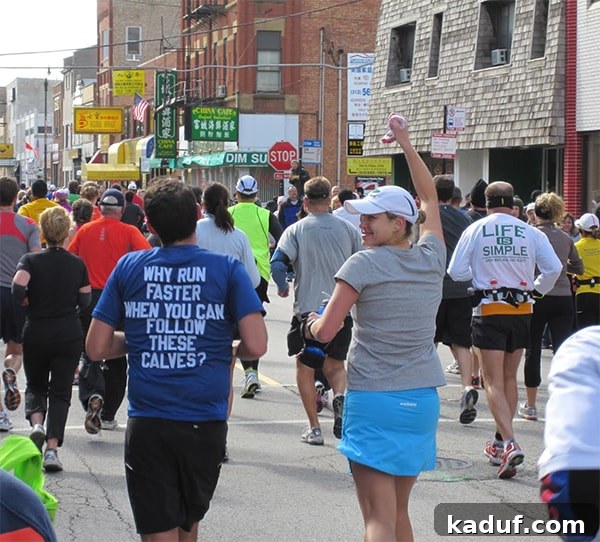
Pictured below is a cherished memory from the 2009 Chicago Marathon, where I’m running alongside my brother once again. He’s wearing a special shirt I made for him, and I have my arm triumphantly raised. We were nearing mile 20, a point where the race truly tests your spirit, but in that moment, seeing my husband in the crowd, I felt on top of the world. We were so close to the finish line, and the energy was electric. It’s moments like these that solidify why I run, and why I believe everyone should find their own version of this incredible journey.