

Unlock the secrets to flawless baking by understanding the crucial role of egg size. This comprehensive guide offers essential information, practical tips, and expert tricks!

The Critical Role of Egg Size in Baking: A Comprehensive Guide
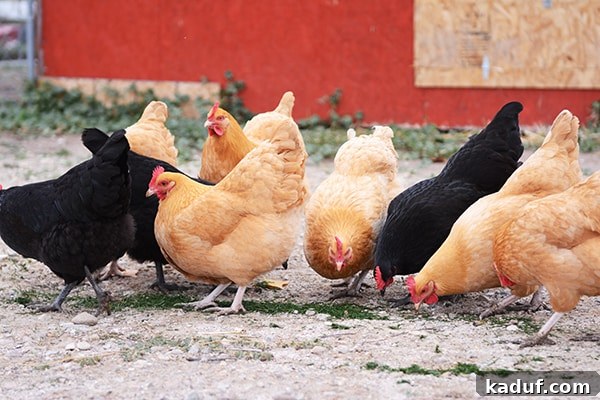
For many home bakers, eggs are a staple, often grabbed from the grocery shelf without a second thought about their size. We assume all eggs are created equal, especially when a recipe simply calls for “eggs.” However, this seemingly minor detail can be the secret ingredient to your baking success or the silent culprit behind a disappointing dessert. As someone who once purchased only large eggs, my perspective dramatically shifted when I started raising my own chickens and observing the delightful, yet often inconsistent, sizes of their fresh produce.
Suddenly, my beloved cookies, quick breads, and cakes started behaving differently. The texture was off, the rise wasn’t quite right, and consistency became a challenge. While everyone praised the superior taste and quality of homegrown eggs, no one warned me that my sweet hens might not consistently lay the standard “large” eggs I was accustomed to buying. This realization sparked a deep dive into the world of egg sizing and its profound impact on the delicate science of baking.
When it comes to everyday cooking – whipping up scrambled eggs, frying an omelet, or poaching for breakfast – egg size rarely warrants a second thought. You can confidently use whatever eggs you have on hand. But baking is a different beast entirely. It demands precision, balance, and an understanding of how each ingredient contributes to the final structure and texture. Eggs are far more than just a binder; they are multifaceted powerhouses that contribute moisture, richness, leavening, stability, and emulsification to your baked goods.
Consider the delicate balance in a brownie recipe: using larger or more eggs than specified can inadvertently transform a dense, fudgy masterpiece into a cakier, drier version. Conversely, in cookies, an insufficient quantity of egg (due to using smaller eggs or too few) might result in a crumbly, dry texture. Too much egg, however, could lead to a fluffier cookie that spreads excessively thin. Understanding and managing egg size is key to achieving consistent, desirable results.
While the fascinating science of how eggs interact within a batter and the intricate journey of eggs from farm to grocery store could fill volumes, our focus today is purely practical. We aim to demystify egg sizing, compare different categories, and most importantly, equip you with the knowledge to accurately read and adapt recipes for baking success. Ready to elevate your baking game?
Understanding Egg Classifications: Jumbo to Medium
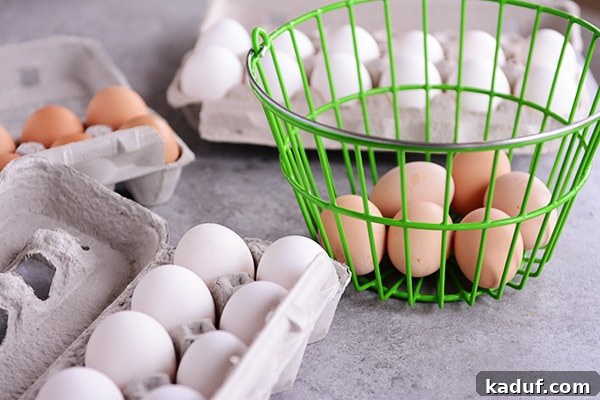
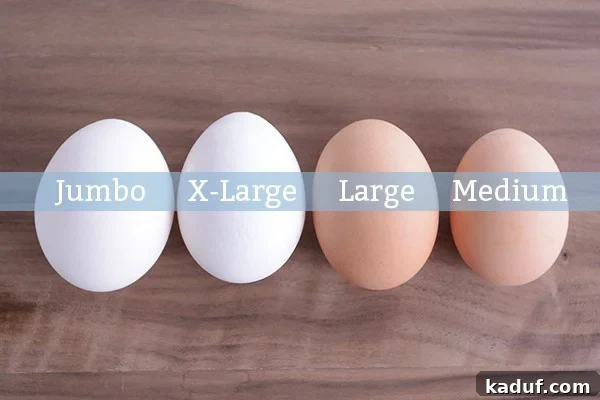
In the United States, eggs are typically categorized into six sizes: Peewee, Small, Medium, Large, Extra-Large, and Jumbo. For the purpose of practical baking, we will primarily focus on the four most common sizes you’ll encounter and purchase: Jumbo, Extra-Large (X-large), Large, and Medium. To provide a clear visual and practical comparison, I’ve gathered and weighed eggs from each of these classifications, specifically focusing on their weight *out of the shell* – which is the crucial measurement for accurate baking.
It’s important to remember that these are averages. Egg weights can vary even within the same size category due to factors like breed of hen, age, and individual variation. My measurements offer a practical guide, not a strict scientific standard. However, they provide an invaluable visual and quantitative understanding of how significantly egg sizes can differ, helping you make informed decisions in your kitchen.
Jumbo Eggs: The Giants of the Carton
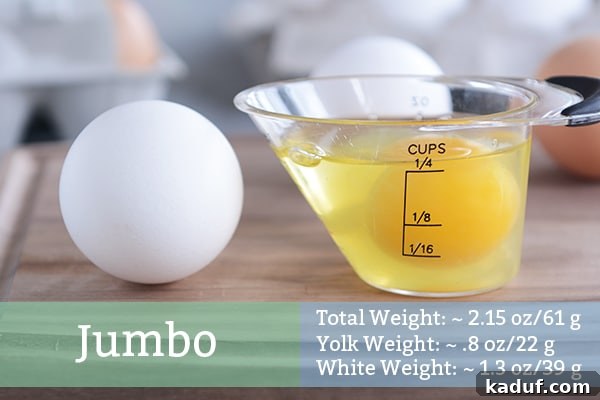
Honestly, before researching for this article, I rarely, if ever, purchased jumbo eggs. The closest I’d come to such a magnificent specimen was an occasional double-yolker from one of my more prolific hens! A jumbo egg, once cracked, typically weighs in at approximately 2 ounces (around 57 grams). This weight, like all subsequent measurements, excludes the shell. In terms of volume, a jumbo egg measures a generous, slightly heaping ¼ cup. Using a jumbo egg when a recipe calls for a large can introduce an excess of liquid and fat, altering the texture and consistency of your baked goods, often making them too moist or causing them to spread more than intended.
Extra-Large Eggs: A Step Down from Jumbo
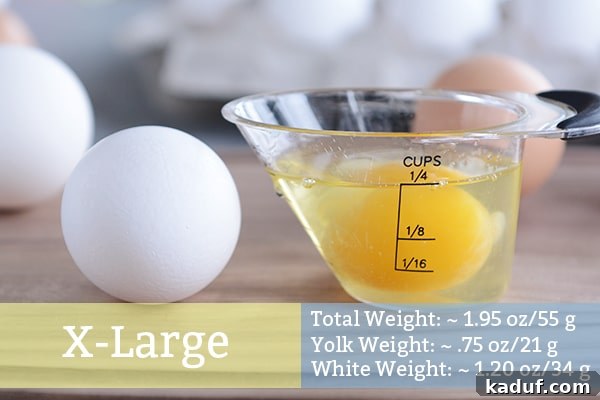
Just a notch below jumbo, extra-large eggs are also quite substantial. An extra-large egg typically weighs about 1.95 ounces (approximately 55 grams) out of the shell, often evening out to a neat ¼ cup in volume. While seemingly a small difference from a jumbo, this slight variation can still be significant in recipes where precise hydration and structure are crucial. Substituting extra-large for large eggs might result in a slightly looser batter or a slightly cakier texture in dense items like brownies.
Large Eggs: The Standard for Most Recipes
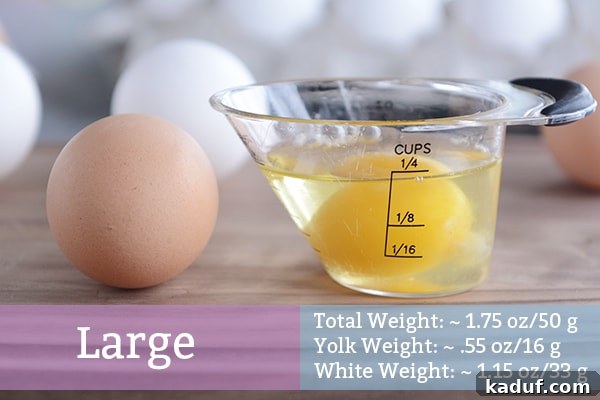
The large egg is arguably the most commonly used size in recipes across the United States, often considered the default if no specific size is mentioned. A large egg weighs approximately 1.75 ounces (about 50 grams) out of the shell and measures just under ¼ cup in volume. This is your benchmark, the “gold standard” for countless baking endeavors. When recipes are developed, they are most often calibrated around the specific weight and volume contributed by a large egg. Deviating from this standard without adjustment can significantly impact the final product.
Medium Eggs: Smaller But Still Mighty
Finally, we have the humble medium egg. Often smaller, perhaps like the first eggs laid by younger hens in a backyard flock, a medium egg weighs approximately 1.4 ounces (around 40 grams) out of the shell. In terms of volume, it’s roughly 3 tablespoons. Using medium eggs when a recipe calls for large can lead to a dryer, denser, or less tender baked good due to insufficient moisture and binding agents. This can be particularly noticeable in delicate cakes or crumbly cookies.

The Nuance of USDA Egg Classifications
To add a layer of complexity, it’s worth noting that in the United States, egg classifications are determined by the minimum net weight per dozen eggs, including the shell. For example, a carton of one dozen large eggs must collectively weigh at least 24 ounces. This means individual eggs within that carton can vary in size and weight, as long as the total dozen meets the minimum standard. The USDA doesn’t specify individual egg weights within a class, which allows for a margin of variability. This slight inconsistency highlights why weighing eggs can be particularly beneficial for precision baking.
Furthermore, egg sizing standards and guidelines vary significantly from country to country. If you’re baking internationally or using recipes from different regions, it’s always prudent to cross-reference their local egg sizing conventions to ensure accurate adaptation.
Practical Tips for Baking with Confidence
All this information might seem overwhelming, potentially making you want to reconsider cracking another egg! But fear not. I’ve compiled several practical guidelines and troubleshooting tips to help you navigate the world of egg sizing and ensure delightful baking experiences.
When in Doubt, Use Large Eggs
Unless a recipe explicitly specifies otherwise, default to using large eggs. They are the most common size used in recipe development across the United States. While there might be slight variations in weight between individual large eggs within a carton, these differences are generally minimal enough that your recipe will still turn out successfully.
Always Follow Recipe Specifications
If a recipe clearly states a specific egg size – be it medium, extra-large, or jumbo – adhere to it. These recipes have been tested and formulated with that particular egg size in mind. Substituting a different size without adjustment will likely alter the delicate balance of ingredients and impact the final texture, rise, and overall outcome.
Embrace the Kitchen Scale for Unparalleled Precision
This is perhaps the most crucial tip for serious bakers seeking consistent, professional-level results. If you own a kitchen scale (I personally recommend this one, which I love), use it! When baking with my homegrown eggs, which naturally vary in size, I always weigh my eggs *out of the shell*. My guideline for a standard large egg is 1.75 ounces or 50 grams. While this might seem like an extra step for a “normal” baker, for me, as a dedicated food blogger, it’s essential for ensuring my recipes are as foolproof and reliable as possible for you.
Troubleshooting Egg Weights with a Scale:
Let’s say a recipe calls for two large eggs, which translates to a total of 3.5 ounces or 100 grams. You crack two eggs, and they weigh only 78 grams. To correct this, crack another egg into a separate bowl, whisk it lightly, and gradually add small amounts to your initial 78 grams until you reach the desired 100 grams. Conversely, if your two cracked eggs are larger than average and weigh 115 grams, whisk them together until combined. Then, remove a teaspoon (or less) of the mixture at a time until you hit the target weight. This method ensures precise ingredient ratios, crucial for delicate baked goods.
What to Do with Leftover Egg Mixture:
Don’t waste any leftover egg! I store it in a sealed container in my refrigerator. This “lonely egg remnants” mixture is perfect for adjusting egg weights in future baking projects or, more commonly, adding a boost of richness to our scrambled eggs or omelets for breakfast.
While the idea of weighing eggs might initially seem daunting, I promise it’s simpler than it sounds. However, if measuring by weight isn’t for you, that’s perfectly fine! Simply stick to the default recommendations: use large eggs unless the recipe specifies a different size. If you find your baked goods are consistently temperamental – perhaps too dry, too crumbly, or spreading excessively – then it might be time to consider the precision of weighing your eggs. While many factors influence baking outcomes, egg size is a significant starting point for troubleshooting inconsistencies.
Beyond Size: Other Egg Considerations
While egg size is paramount, a couple of other factors relating to eggs can subtly influence your baking results:
- Egg Temperature: Most baking recipes call for room temperature eggs. This is because warmer eggs incorporate more easily and evenly into batters, creating a smoother emulsion with other ingredients like butter and sugar. Cold eggs can cause fats to seize up, resulting in a lumpy batter and a denser final product.
- Freshness: Extremely fresh eggs tend to have a firmer albumen (egg white) and stand taller. While less critical than size or temperature for the chemical reactions in baking, very fresh eggs might yield slightly different textures or rises compared to older store-bought eggs.
Achieve Baking Excellence with Confidence
Eggs, in all their glorious versatility, should be a source of joy and success in your kitchen, not stress or confusion. By understanding the nuances of egg sizing, embracing precision when needed, and following these practical tips, you can confidently tackle any baking recipe. Hopefully, today’s discussion has demystified the topic and empowered you to achieve consistent, delicious results every time you bake.
Do you have any lingering questions about egg sizes or baking with them? Feel free to ask away in the comments section below, and I’ll do my best to provide quick and helpful answers!
Disclaimer: This post contains an Amazon affiliate link.