
Welcome back, fellow runners and fitness enthusiasts! As we navigate the exciting, sometimes challenging, journey of half marathon training, I’m eager to share my experiences and, as always, hear your invaluable insights. This week has been a whirlwind of unexpected setbacks and crucial learning moments, reinforcing that training is as much about mental resilience as it is about physical prowess.
Instead of a day-by-day rundown of last week’s workouts, let me cut straight to the chase: the very thing I’d been dreading since embarking on this half marathon training journey actually happened. I got sick. Yes, a common head cold struck, and while I know these things pass, for a newbie runner like myself, whose carefully constructed training schedule feels like the absolute cornerstone of progress, missing even one or two runs felt like a monumental hurdle. Beyond occasionally shifting run days, the only other time I’d truly missed a scheduled run was due to a back injury a few weeks prior. The thought of derailing my progress was genuinely stressful. However, there was an unexpected silver lining: being hit by a bus (metaphorically, of course) meant my primary focus shifted entirely to recovery, making the stress of missed runs temporarily take a backseat to locating the tissue box. In hindsight, it landed on perhaps the most forgiving week, scheduled with several manageable 3-milers and no daunting long runs. Consequently, I only managed to run twice, and even those efforts felt, well, quite pathetic.
 My wonderful 9-year-old left this beautiful note on my pillow one evening, sensing I was feeling a bit disheartened. It was a powerful reminder of the hidden motivations that keep us going.
This sweet gesture from my son was a poignant reminder that while training can be physically demanding, the emotional and mental aspects are equally important. Support, whether from loved ones or within yourself, is crucial. Thankfully, after a week dedicated to self-care, I feel firmly on the road to recovery. A big thank you to my trusty essential oils, daily doses of orange juice, elderberry syrup, apple cider vinegar, and consistent early bedtimes. These holistic approaches, combined with simply resting and listening to my body, have made a significant difference. I’m now hopeful and incredibly motivated for a much stronger and more consistent running week ahead.
Optimizing Your Half Marathon Training Plan: This Week’s Focus
As we delve deeper into half marathon training, understanding and adapting your plan is key. My schedule for this week is designed to gently reintroduce mileage and build endurance, particularly after a period of illness. Here’s what’s on the docket:
- -3 miles Monday: A gentle re-entry, focusing on comfortable pace and form.
- -Cross- or strength-train Tuesday: Essential for building overall body strength, preventing injuries, and supporting running mechanics.
- -4 miles on Wednesday: A slight increase to build back endurance.
- -3 miles on Thursday: Another shorter run, perhaps focusing on speed or simply maintaining consistency.
- -Rest or stretch/yoga on Friday: Crucial for recovery, flexibility, and mental rejuvenation before the long run.
- -7 miles on Saturday: The longest run of the week, a significant milestone in building endurance.
If you’ve been following the original training schedule I shared previously, you’ll notice I’ve made a few minor adjustments for these crucial final weeks leading up to race day. Primarily, most of my 2-mile runs have been incrementally increased to 3 miles. This change felt natural, as I’m comfortable at this distance and don’t mind the added mile – in fact, I feel it contributes positively to my overall endurance. Additionally, while the next three Saturdays initially called for 8-mile long runs, I’ve decided to “only” (it still sounds humorous to say that!) tackle 7 miles this coming Saturday. This decision stems purely from a gut feeling; after a week of sickness, I believe it’s a more prudent approach to gradually build back up, tackling the 8-mile distance next week when I’ll have the benefit of running it twice in subsequent weeks. Seven miles will mark my longest run to date, a significant personal best. Send all your positive thoughts and prayers my way!
These adjustments highlight a critical aspect of effective half marathon training: flexibility. While a schedule provides a roadmap, listening to your body, acknowledging life’s curveballs (like getting sick), and making intelligent modifications are paramount. Pushing through illness or extreme fatigue can lead to setbacks, injuries, or burnout. The goal is consistent, sustainable progress, not rigid adherence at all costs. This adaptive mindset ensures longevity in your running journey and a more enjoyable, successful race day.
Essential Gear: Elevating Your Long Run Experience
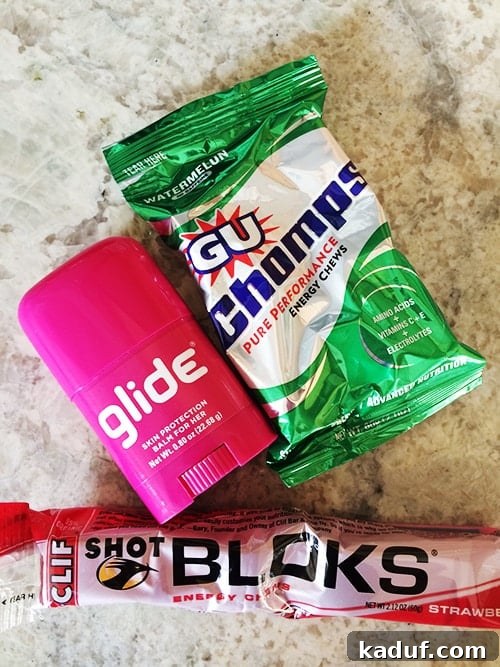
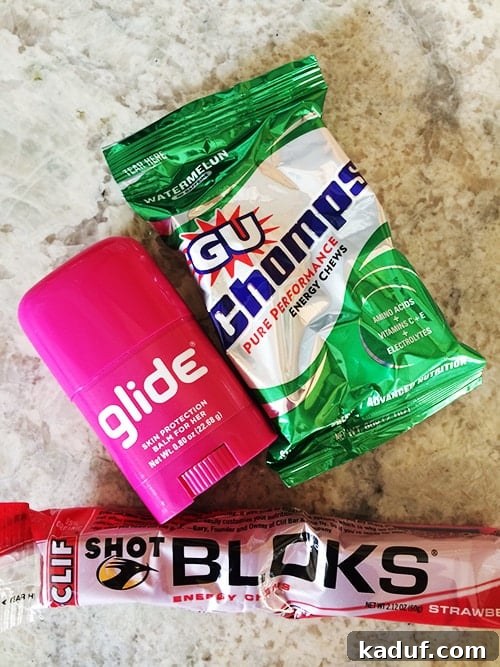
This week brought a delightful and unexpected package from my dear, longtime friend, Mel (whose incredible running story was featured here a few weeks ago). Her thoughtful gift instantly transitioned my focus to some of the more practical, yet often overlooked, aspects of long-distance running: body glide and shot blocks. Who am I, and how did I become someone who considers these essentials? It’s truly a testament to how deep I’m getting into this running world! Thankfully, Mel included detailed instructions on how often, when, and for which types of runs she incorporates both of these items. Her wisdom will be put to the test this coming week as I plan to use both during my challenging 7-miler. It feels both scary and incredibly hardcore all at the same time, embracing these tools that serious runners rely on for comfort and performance.
Your previous comments have been incredibly helpful, offering valuable feedback on everything from chafing solutions and hydration strategies to pre- and post-run nutrition. Building on that collective wisdom, I have a few more pressing questions and one fantastic discovery I’m excited to share.
Navigating Runner’s Dilemmas: Fueling, Comfort, and Hair Solutions
Fueling Your Runs: The Energy Question
The topic of mid-run nutrition often sparks lively debate among runners. Do you typically incorporate energy gels (like Gu) or shot blocks into your longer runs? If so, what’s your strategy? How often do you consume them, and at what mileage do you start using them? My biggest concern, if I’m being honest, is the potential for stomach upset or that dreaded gag reflex. Currently, for runs exceeding 4 miles, I carry water in a hydration pack, and for anything over 5 miles, I might occasionally grab an applesauce pouch. That’s about the extent of my on-the-go fueling. However, as the distances increase, I know I need a more reliable and efficient energy source. Share your experiences: what works for you, how do you practice fueling without discomfort, and what are your go-to energy supplements for half marathon distances?
Understanding the science behind fueling is crucial for any runner, especially when training for a half marathon. Carbohydrates are your body’s primary fuel source during exercise, and when your natural stores (glycogen) deplete, you hit “the wall.” Energy gels and chews are designed to deliver rapidly absorbed carbohydrates, electrolytes, and sometimes caffeine, to replenish these stores and maintain energy levels. It’s not just about consuming them; it’s about training your gut to process them during exertion. This involves experimenting with different brands, flavors, and forms (gels vs. chews vs. real food like dates or bananas) during your long training runs to find what your stomach tolerates best. Aim to consume 30-60 grams of carbohydrates per hour for runs lasting longer than 60-75 minutes, usually starting around the 45-minute mark, and then every 30-45 minutes thereafter, always accompanied by water to aid absorption and prevent stomach distress.
Chafing Prevention: Essential Apparel Tips
Last week, many of you generously chimed in with excellent feedback on combating chafing, recommending products like Body Glide and T2. This brings me to my next, perhaps more intimate, query (and I’m so glad we’re all friends here!): beyond topical solutions, do you have any specific recommendations for sports bras, shorts, or general running apparel that are inherently less prone to causing chafing? I’m talking about specific brands, fabric types, or design features that have made a real difference for you. For women, sports bras can be a major culprit, and for everyone, shorts and seams can cause irritation in sensitive areas. I’m keen to hear about any clothing items that offer superior comfort and protection, allowing us to focus on the run, not the rub!
Chafing is often caused by friction between skin and fabric, or skin on skin, exacerbated by sweat. While anti-chafing balms are a first line of defense, selecting the right apparel is equally vital. Look for running clothes made from technical, moisture-wicking fabrics like polyester, nylon, or blends, which pull sweat away from your skin, keeping you drier and reducing friction. Avoid cotton, which absorbs sweat and stays wet, increasing the likelihood of chafing. Pay close attention to seams; flatlock seams are preferred as they lie flat against the skin, minimizing irritation. For sports bras, ensure a snug but not overly tight fit, and look for designs with minimal seams or seamless construction in areas prone to chafing (under the arms, around the band). For shorts, consider options with longer inseams (like bike shorts or compression shorts) to prevent inner thigh chafing, or choose looser shorts with built-in liners made from smooth, anti-chafing material. Always test new apparel on shorter runs before committing to them for a long run or race day.
The Power of Proper Socks: My New Favorite
My sister, who’s not only getting back into running but also just committed to her own half marathon last week (how sweet is that!), recently enlightened me about the root cause of my persistent blisters: running in everyday cotton socks. Jeez, how was I supposed to know? She enthusiastically recommended Feetures socks. As fantastic as they sounded – labeled with a distinct Left and Right for goodness sake, they must be amazing! – I resisted for several weeks. Honestly, paying $15 for a single pair of socks felt inherently wrong, almost against my personal religion of frugality. But my blisters eventually reached a breaking point, becoming absolutely debilitating. I finally buckled. And honestly, after wearing them for the first time, I swear my feet were singing. More importantly, no more blisters! While I’m not buying another pair just yet (one step at a time!), I meticulously wash them after each run. So far, they have proven to be absolutely worth every penny.
My sister’s advice about ditching cotton socks for running is spot on, and it’s a common rookie mistake! Cotton might feel soft for everyday wear, but it’s detrimental for running because it absorbs moisture, holding sweat against your skin. This creates a damp, friction-prone environment – the perfect recipe for blisters. Technical running socks, like Feetures, are engineered with advanced synthetic fibers (like polyester, nylon, or spandex blends) or merino wool, which excel at wicking moisture away from your feet. They also often feature strategic cushioning, arch support, and seamless construction to reduce pressure points and friction. The “Left” and “Right” labeling isn’t just a gimmick; it signifies an anatomical fit designed to contour perfectly to each foot, further minimizing bunching and irritation. Investing in good running socks is a small but crucial step in preventing blisters, hot spots, and overall foot discomfort, allowing you to run longer and more comfortably.
Taming Your Tresses: Hair & Headband Solutions for Shorter Hair
My current hairstyle is somewhat challenging for running: it’s short-ish, not quite long enough for a proper ponytail, yet just long enough to constantly fall into my face and become a general nuisance. I’m desperate for some effective tips and recommendations on running headbands or other hair solutions that truly do their job. I need something that will reliably keep shorter hair back without constantly slipping up or down, requiring me to interrupt my stride to adjust it. There’s nothing more frustrating than a slippery headband during a challenging run! Do you have any tried-and-true headbands, clips, or hair management techniques that work wonders for short hair? Please, help a fellow runner out!
Managing shorter hair during a run can indeed be a persistent battle against flyaways and slippage. For headbands, look for options made with silicone grips on the underside; these provide extra friction against your hair and skin, helping the band stay put. Brands like Sweaty Bands or Bondiband are popular for their non-slip technology. Consider headbands that are wider or made of a slightly thicker, moisture-wicking fabric, as these can offer better coverage and absorb more sweat, preventing saturated bands from slipping. Another effective solution can be combining a thinner silicone-backed headband with small, strategically placed bobby pins, especially around the temples, to secure any stubborn strands. Alternatively, a buff or multi-functional headwear can be folded and worn as a wider headband, offering secure coverage. For very short hair, a lightweight running cap or visor can also keep hair out of your face and offer sun protection, providing a dual benefit. Experiment with different types and placements to find what offers you the most secure and comfortable solution, allowing you to focus on your run, not your hair.
Okay, I’ll stop bugging you with all my questions now! I genuinely appreciate all your wisdom and insights. Here’s to a fantastic, blister-free, chafe-free, and energized running week. I can just feel it – it’s going to be a good one!