
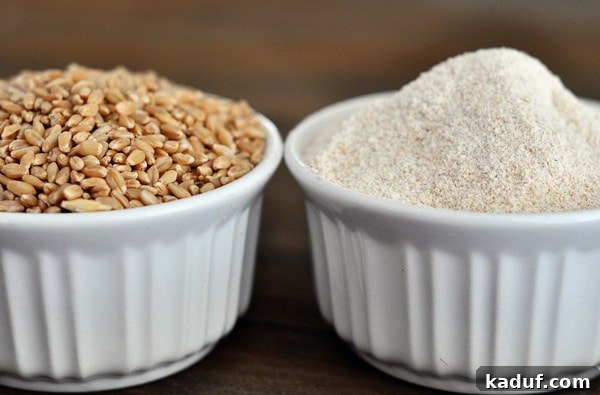
The Ultimate Guide to Wheat Grinders: Elevate Your Home Milling Experience
Welcome back to our comprehensive series, Wheat Grinding 101! In our first installment, we explored the fascinating world of wheat types, where to source quality wheat berries, and the diverse culinary applications for freshly milled grains. Today, we’re diving deep into the heart of home milling: the wheat grinder itself.
Choosing the right grain mill is a pivotal decision for any aspiring home baker or advocate of whole-grain nutrition. This guide aims to demystify the process, offering insights into various models, their features, and critical considerations. We’ll explore why home grinding is a game-changer and share invaluable community-sourced reviews to help you make an informed choice. Get ready to discover the powerful benefits of a quality wheat grinder and how it can transform your kitchen experience.
Why Grind Your Own Wheat: Unlocking the Power of Fresh Flour
Before we delve into the mechanics of grain mills, let’s address a fundamental question that often arises: “Why go through the effort of grinding my own wheat when pre-ground flour is readily available at the store?” The answer lies in a multitude of advantages that span nutrition, cost-efficiency, versatility, and even household preparedness.
1. Unparalleled Control Over Your Ingredients
Grinding your own wheat grants you an exceptional level of control over the flour you use. This means you can:
- Select Your Wheat Type: Most commercial whole wheat flours are derived primarily from red wheat berries. However, by grinding at home, you can choose from a wider array of wheat types, such as soft white wheat for lighter, milder baked goods, or hard red wheat for robust, chewy breads. Many home millers prefer a custom blend of red and white wheat, or even opt for the unique characteristics of ancient grains like spelt or kamut.
- Customize Fineness and Coarseness: Store-bought whole wheat flour typically comes in a standard grind. A quality home grain mill allows you to precisely adjust the texture of your flour, from an ultra-fine, velvety powder ideal for delicate pastries to a coarse meal perfect for rustic breads or creating cracked wheat. This adaptability opens up a world of culinary possibilities, empowering you to tailor your flour to specific recipes.
- Optimize Nutritional Value: This is arguably one of the most significant benefits. The moment a wheat berry is cracked and ground, its delicate oils and nutrients are exposed to air, initiating a process called oxidation. This oxidation causes a gradual loss of nutritional potency, meaning that flour that has sat on a store shelf for weeks or months has already begun to degrade. Grinding your wheat fresh, just before use (or freezing it immediately after grinding), ensures that you’re incorporating the maximum nutritional value into your baked goods. You’ll harness the full spectrum of vitamins, minerals, and fiber that whole grains offer.
2. Significant Cost Savings Through Bulk Purchasing
While the initial investment in a quality wheat grinder might seem substantial, it quickly pays for itself over time. Wheat berries can be purchased in bulk quantities – often 25 to 50 pounds or more – at a significantly lower per-pound cost than pre-ground flour. By sourcing your wheat berries from cooperatives, local farms, or specialized online retailers (as discussed in our previous post), you can drastically reduce your overall flour expenses, especially if you bake frequently. This economic advantage makes home milling a smart long-term financial decision for many households.
3. Beyond Flour: Unlocking Culinary Versatility
A wheat grinder isn’t limited to producing just flour. These versatile machines can transform various whole grains and seeds into an array of useful ingredients. With a grain mill, you can:
- Make Cracked Wheat: By using a coarser setting, you can produce cracked wheat, a hearty ingredient perfect for adding texture to breads, pilafs, or porridges.
- Mill Other Grains: Many grinders handle a wide range of grains beyond wheat, including oats, rice, corn, rye, barley, millet, spelt, and quinoa. This capability allows you to experiment with diverse flours for gluten-free baking, specialty recipes, or simply to broaden your family’s nutritional intake.
- Grind Spices and Legumes: Some high-performance mills are even capable of grinding dried spices, lentils, and various dry beans (pinto, red, garbanzo, kidney) into flours or meals, further expanding your culinary toolkit.
4. Enhancing Food Security and Preparedness
In an unpredictable world, having a robust food storage plan is a comforting reassurance. A supply of wheat berries, which have an exceptionally long shelf life when stored properly, coupled with a reliable grain mill, forms a cornerstone of self-sufficiency. In the event of natural disasters, economic downturns, or even personal financial hardship, knowing you have a staple like wheat that can be easily converted into nourishing food for your family offers invaluable peace of mind. Many families have found their food storage, including wheat berries and a grinder, to be an indispensable blessing during challenging times.
5. Cultivating Healthier Eating Habits
The sheer convenience of having a wheat grinder on your counter, ready to transform wheat berries into fresh flour, naturally encourages healthier eating habits. When whole grains are so easily accessible, you’re far more likely to incorporate them into your daily baking – from creating wholesome homemade breads to adding a nutritional boost to cookies, muffins, and other baked goods and breakfast foods. The enhanced flavor and nutritional density of freshly ground whole wheat simply elevates everything you make. Plus, there’s a certain satisfaction in knowing that even a whole wheat chocolate chip cookie offers a little more goodness!
The Investment and Its Value: Is a Wheat Grinder Right for You?
There’s no denying that acquiring a quality wheat grinder represents an investment. These machines are not typically inexpensive. However, for those who regularly bake with whole grains, prioritize nutritional value, seek long-term cost savings, or value food preparedness, the benefits overwhelmingly outweigh the initial outlay. The factors outlined above – control, cost-efficiency, versatility, preparedness, and health – contribute to a return on investment that goes far beyond monetary value.
It’s equally important to acknowledge that home wheat grinding is not for everyone. This series is designed as a valuable resource for individuals who are already engaged in home milling, or for those who are seriously contemplating starting. There’s absolutely no pressure to adopt this practice if it doesn’t align with your lifestyle or priorities. We all have unique strengths and commitments; for some, it might be baking fresh bread, for others, it’s maintaining a spotless home. The goal here is simply to provide comprehensive information for those who find value in this particular culinary journey.
My Trusted Companion: A Deeper Look at the KoMo Fidibus Classic Grain Mill
Having used various grain mills over the years, I can confidently share my experience with the KoMo Fidibus Classic, a European model that has garnered significant acclaim in the United States. I’ve cherished this mill for nearly four years, relying on it at least 4-5 times a week to grind fresh wheat for all my baking needs. Its compact design allows it to live permanently on my kitchen counter, ready for action at a moment’s notice.
The KoMo Fidibus Classic is a testament to German engineering, renowned for its efficiency and elegant simplicity. Beyond its primary function of grinding wheat, its capabilities are remarkably broad. This mill excels at processing a wide array of grains and seeds, including:
- Oats
- Rice
- Triticale
- Kamut
- Spelt
- Buckwheat
- Barley
- Rye
- Millet
- Teff
- Quinoa
- Amaranth
- Sorghum
- Dent (field) corn
Furthermore, it effortlessly handles spices, lentils, and various dry beans such as pinto, red, garbanzo, and kidney beans. While I predominantly use it for wheat (approximately 99% of the time), its extensive versatility is a significant point of pride and a valuable asset for diverse culinary exploration.
How the KoMo Fidibus Classic Operates
Let’s walk through the straightforward process of operating this remarkable grain mill:
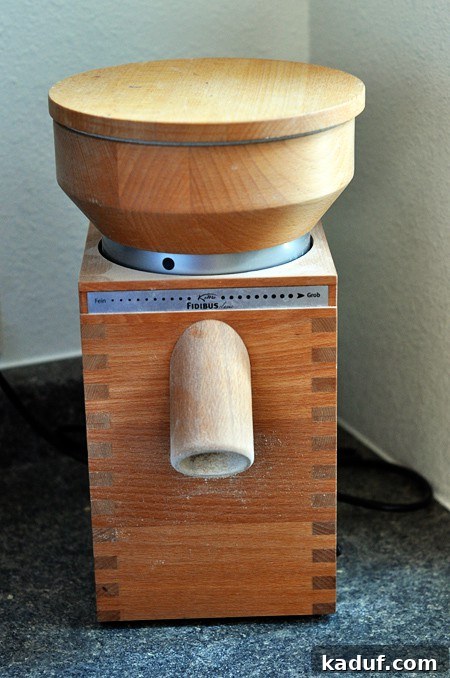
Like most modern wheat grinders, the KoMo features a distinctive “hopper” – a bowl-shaped reservoir located at the top of the unit. This is where the magic begins.
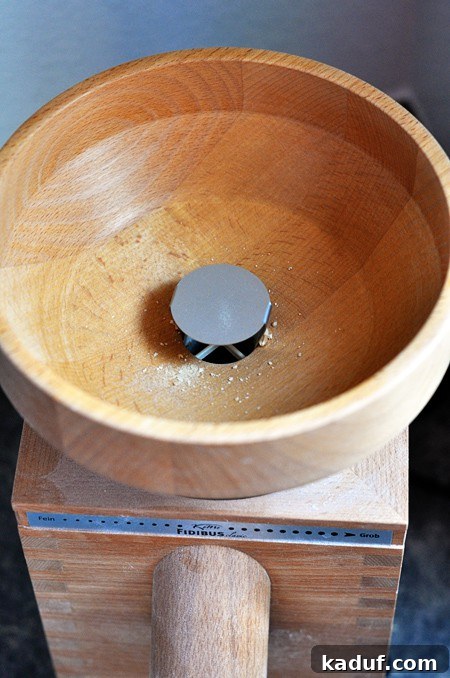
The hopper is then loaded with your chosen wheat berries or other grains. My KoMo mill’s hopper comfortably accommodates about 6 cups of wheat berries, though capacity can vary between different models and brands.
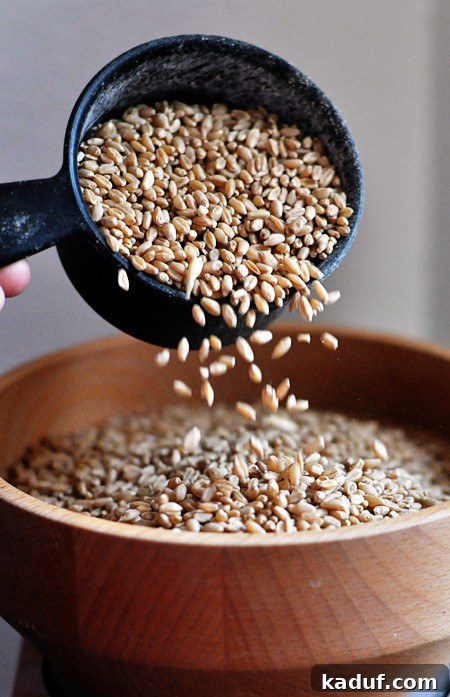
Once the hopper is filled (it doesn’t need to be full to operate), a simple flick of the power button on the side activates the milling process. The wheat berries are drawn between precision-engineered corundum-ceramic grinding stones, which mill them into flour.
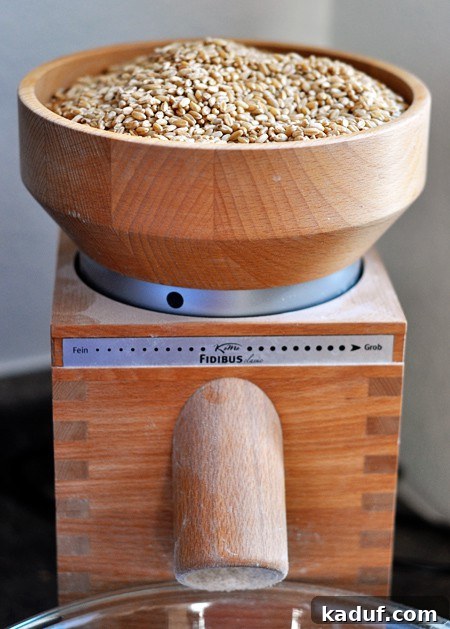
I typically place a large Pyrex bowl directly underneath the output chute, and the freshly ground flour flows smoothly into the receptacle, ready for immediate use.
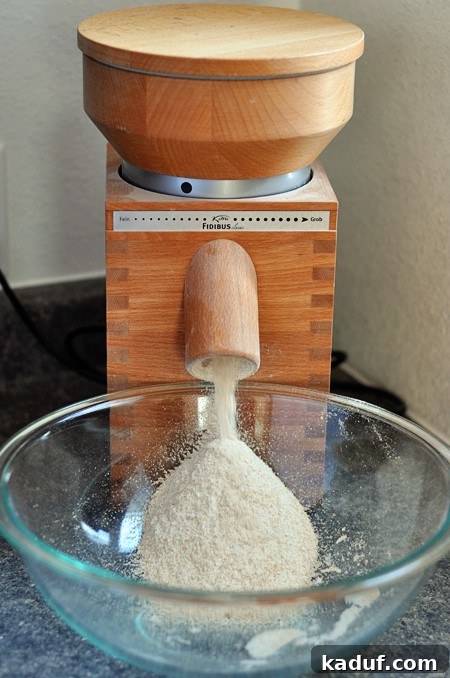
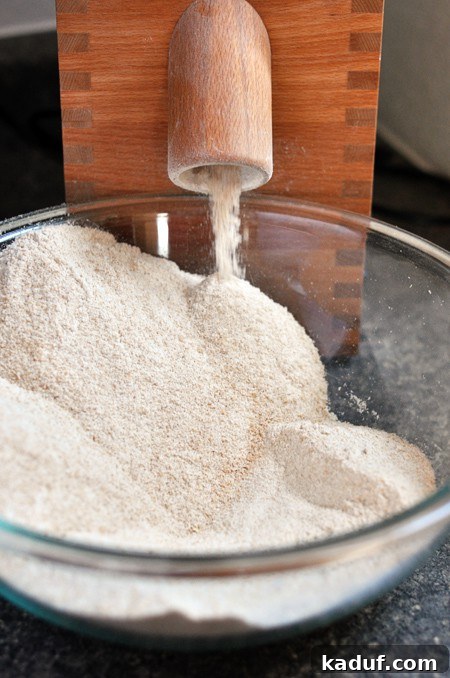
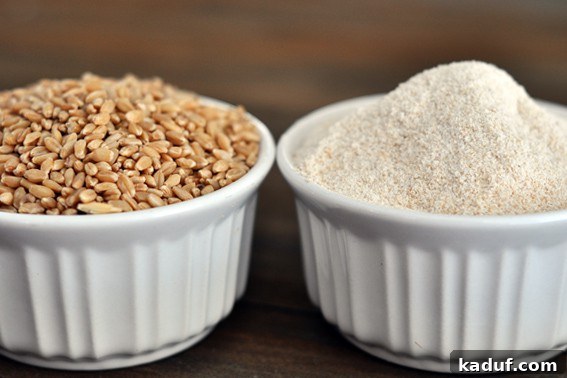
From 6 cups of wheat berries, I consistently yield approximately 12 cups of flour. It’s important to remember that freshly ground flour contains more air, making it fluffier. For precise measurements, allow the flour to settle slightly. Personally, I simply pack it a bit more gently into measuring cups right after grinding.
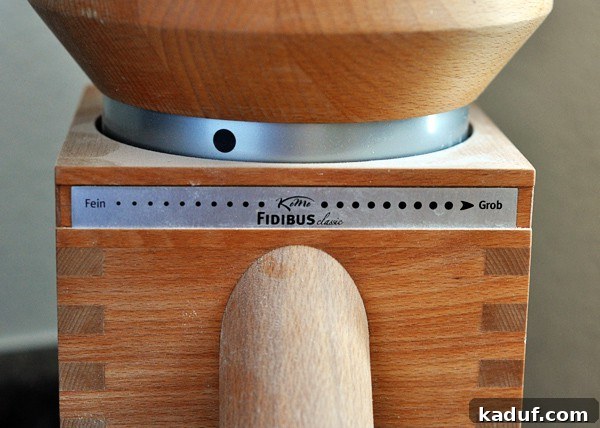
A key feature, common to many high-quality mills, is the ability to adjust the flour’s texture. With the KoMo, I simply twist the hopper bowl to seamlessly transition between an ultra-fine, pastry-quality flour and a coarser meal perfect for cracked wheat or rustic baking. This intuitive control makes it incredibly user-friendly.
The result is consistently beautiful, light, and fluffy flour, brimming with the fresh aroma and full nutritional profile of whole grains. It’s a truly amazing transformation from hard kernels to culinary gold.
Considering Your Options: Pros and Cons of the KoMo Fidibus Classic
Every wheat grinder on the market possesses unique characteristics in terms of price, capacity, noise level, and the fineness of flour it produces. Therefore, thorough research is paramount when selecting a mill. Before embracing the KoMo, I used a Nutrimill for about five years, which was a robust machine. However, it eventually developed significant issues, including an unfortunate tendency to disperse flour widely across my kitchen!
Main Pros of the KoMo Fidibus Classic:
- Compact Countertop Design: Its small footprint allows it to remain on the kitchen counter, ensuring that fresh flour is always just moments away. This eliminates the hassle of retrieving and stowing away a larger, heavier machine.
- Exceptional Speed and Fineness: The KoMo grinds flour remarkably fast and achieves an incredibly fine texture, comparable to or even surpassing other top-tier mills I’ve experienced. Its easily adjustable coarse settings also make producing perfect cracked wheat a breeze.
- Broad Grain Versatility: As detailed earlier, this mill handles an extensive list of grains, seeds, and even spices, making it a highly versatile kitchen appliance for various dietary needs and culinary experiments.
- Low Heat Generation: Unlike some impact mills that can generate considerable heat during grinding, the KoMo’s stone-grinding mechanism operates at a lower temperature. This crucial feature helps to preserve the delicate nutritional integrity of the flour, preventing nutrient degradation.
- Clean Operation: A significant advantage is its minimal mess. The mill grinds cleanly with virtually no flour dust escaping during operation. While a quick wipe-down might be needed after a week or so of consistent use (as you might notice a slight dust accumulation in older photos), it’s far superior to mills that create a fine cloud of flour.
- Minimal Maintenance: Cleaning is remarkably simple. There are no intricate parts, rings, or components to disassemble and wash. A monthly pass of a handful of rice through the mill is generally sufficient to keep it clean and prevent any pesky weevil infestations.
Main Cons of the KoMo Fidibus Classic:
- Premium Price Point: The KoMo Fidibus Classic is among the more expensive grain mills available. While it required dedicated saving for about a year before purchase, the investment has proven to be well worth every penny for its performance and longevity.
- Noise Level: It operates with a considerable amount of noise, comparable to that of a household vacuum cleaner. This is a common characteristic of powerful electric grain mills, so it’s a factor to consider if noise sensitivity is an issue.
- Smaller Hopper Capacity: Compared to some heavy-duty, larger-capacity mills, the KoMo’s hopper is relatively smaller. This isn’t an issue for me as I prefer to grind smaller batches on demand. However, if your baking habits involve milling, for example, 20 pounds of wheat at once, you would need to refill the hopper more frequently than with mills designed for larger bulk processing.
Collective Wisdom: Community Reviews and Insights
While my personal experience offers valuable insight, it’s crucial to consider a broader spectrum of opinions before making such a significant purchase. To provide a balanced perspective, I gathered input from over 50 community members who shared their experiences with various wheat grinders – detailing what they loved and disliked about their respective mills. This extensive compilation of user reviews is an invaluable resource, providing real-world feedback on a wide range of models. I encourage you to delve into this document; it reads like a fascinating novel for anyone interested in home milling. Simply click on the image below to access the full document.
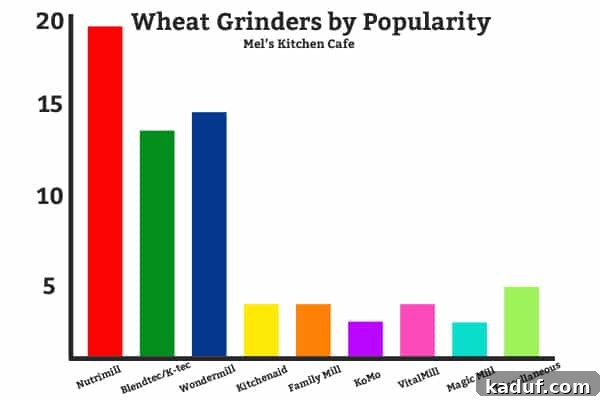
Popular Grain Mills: An Overview
For a quick snapshot of grain mill popularity among home users, here’s an at-a-glance view showcasing the prevalence of different types:
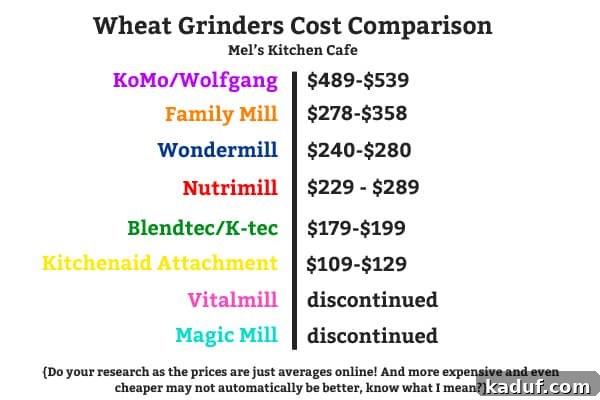
Cost Comparison of Wheat Grinders
To further assist in your decision-making, I’ve compiled a cost comparison for the wheat grinders listed in the popularity graph above. Please note that these figures represent average prices, as actual costs can fluctuate based on sales, promotions, and specific retailers.
Where to Buy Your Wheat Grinder
Finding the right place to purchase a wheat grinder often involves a mix of local and online exploration. While some specialty kitchen stores or health food retailers might carry models, they aren’t always widely available, especially in rural areas. Online marketplaces offer a much broader selection. Here are a few reputable sources that have been trusted by friends and family (my original purchase was from a company that no longer sells them):
-
Pleasant Hill Grain
-
Emergency Preparedness
-
Amazon
A Note on Manual Wheat Grinders: Essential for Preparedness
For those deeply committed to preparedness and food storage, exploring manual or electricity-free wheat grinders is a highly recommended step. While powerful electric mills offer convenience, they become useless during a power outage. A robust hand-crank grain mill ensures your ability to process grains, even when the grid is down. You might argue that baking bread without electricity is also challenging, but as we’ve discussed, wheat berries offer numerous nutritional benefits beyond just bread flour. With an alternative heat source like a propane stove or outdoor fire, you could still prepare cracked wheat, pancakes, or other staple foods during an emergency. This “food for thought” highlights the critical role of a manual grinder in a comprehensive emergency plan. While I don’t personally own one and cannot recommend a specific brand, a quick online search for “electricity-free wheat grinder” or “hand wheat grinder” will yield numerous valuable resources and product reviews to guide your research.
Conclusion: Your Journey to Freshly Milled Goodness
We’ve covered a vast landscape of information today, from the compelling reasons to grind your own wheat to an in-depth look at a popular grain mill and crucial purchasing considerations. Choosing a wheat grinder is a personal decision, influenced by your specific needs, baking habits, and budget. By understanding the benefits of fresh flour, weighing the pros and cons of different models, and leveraging community insights, you’re now well-equipped to embark on or continue your journey into the rewarding world of home grain milling.
Do you have any lingering questions? Perhaps you have experience with a grain mill you’d like to share? Feel free to connect; I genuinely enjoy discussing the wonders of wheat and the incredible potential it holds for our kitchens!