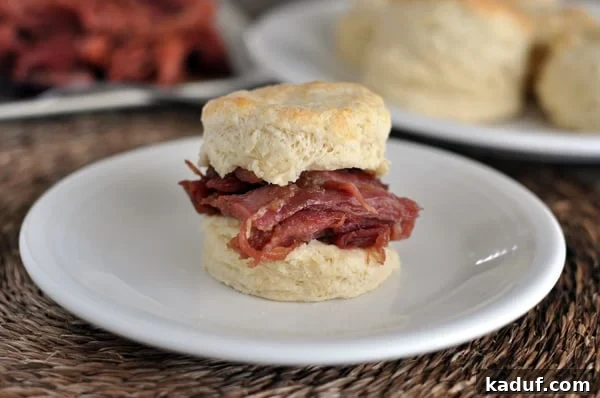
Welcome to a culinary revelation that promises to redefine your expectations of ham. Forget everything you thought you knew about preparing this holiday staple, because what you’re about to discover is a truly out-of-the-box cooking method that delivers unparalleled tenderness and flavor. This isn’t just another ham recipe; it’s *the* recipe that will earn you rave reviews and solidify your reputation as a master chef. Prepare to experience the most succulent, fall-off-the-bone, sweet baked ham you’ve ever tasted.
In a world overflowing with countless ham preparations, from honey-glazed to smoked, one might question the necessity of yet another recipe. Indeed, when you already have exceptional options like a slow cooker maple brown sugar ham or a classic maple-glazed version, it’s easy to assume you’ve explored every possibility. However, sometimes a truly unique approach emerges that completely transforms an ingredient, elevating it to an extraordinary level. This is precisely what this sweet baked ham recipe achieves.
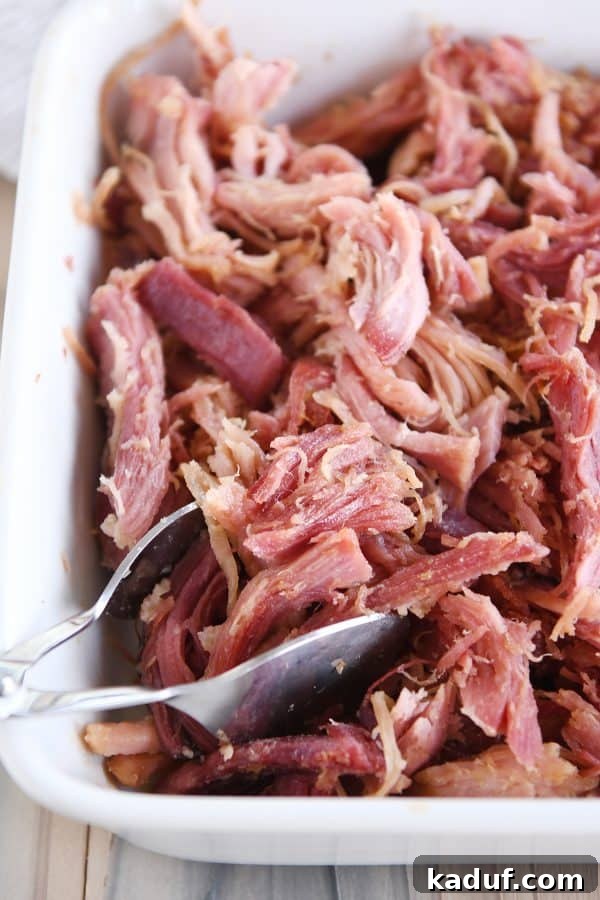
The journey to this phenomenal ham began with a recommendation from a friend whose culinary judgment I implicitly trust. When she declared this sweet baked ham as the “best ham *ever*,” I knew I had to try it. And believe me, it did not disappoint. The results were so astounding that it’s difficult to convey just how truly life-changing this dish is. It’s not merely delicious; it’s an incredible, unforgettable experience that will become a new holiday tradition.
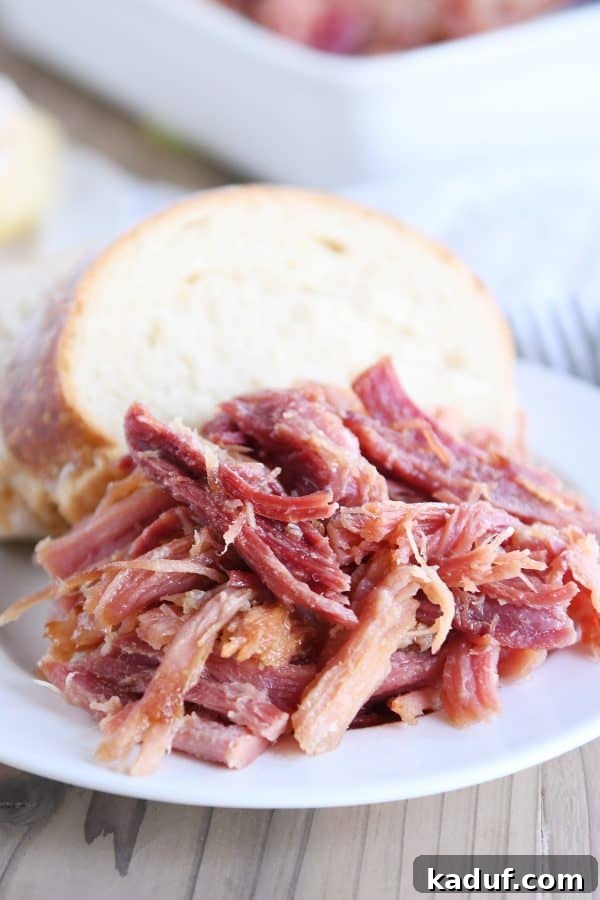
The Secret to Unbelievably Tender Sweet Baked Ham
What sets this sweet baked ham apart from any other recipe you’ve encountered? The secret lies in an unconventional, yet remarkably effective, initial cooking step. Instead of simply baking the ham, we begin by boiling a bone-in ham in a unique solution of water and white vinegar for several hours. I understand the skepticism this might elicit – boiling ham in vinegar sounds unorthodox, to say the least. But trust the process; this method is the key to achieving a ham that is unbelievably tender, moist, and infused with a subtle tang that perfectly balances the sweetness of the subsequent glaze.
The vinegar, far from making the ham taste sour, acts as a powerful tenderizer. Its acidity breaks down the connective tissues in the meat, ensuring that every fiber becomes incredibly soft and succulent. As the ham simmers, the vinegar’s pungent aroma dissipates, leaving behind only the desirable tenderizing effect. The long, slow simmer also gently cooks the ham, allowing the flavors to develop beautifully and setting the stage for the glorious sweet glaze that will be added later.
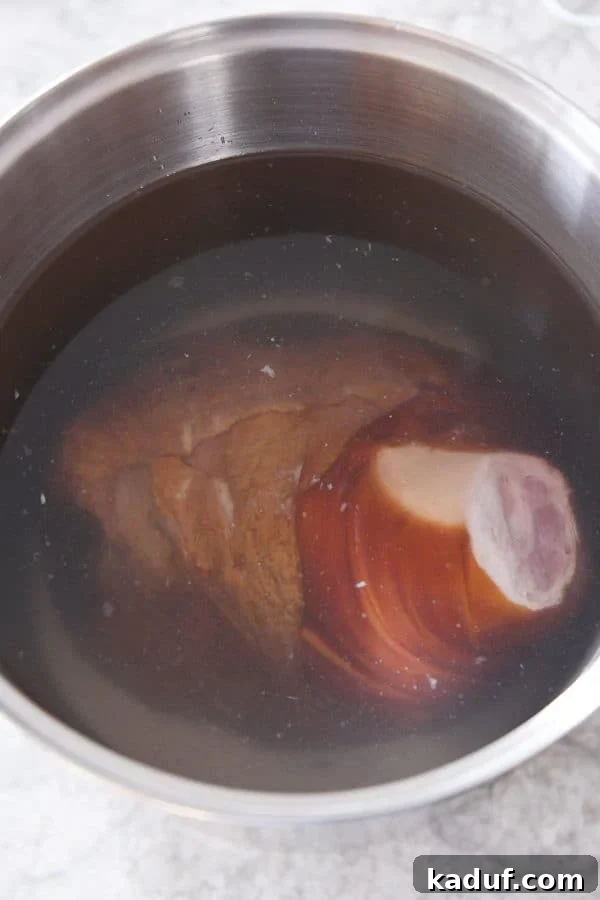
For this crucial first step, you’ll need a substantial pot that can fully accommodate your ham and enough liquid to cover it by at least an inch or two. The precise amount of vinegar and water will vary depending on the size of your ham, but the ratio is always two parts water to one part white distilled vinegar. Don’t underestimate the size of the pot required; the liquid can be quite active during simmering, and you want to ensure no overflow.
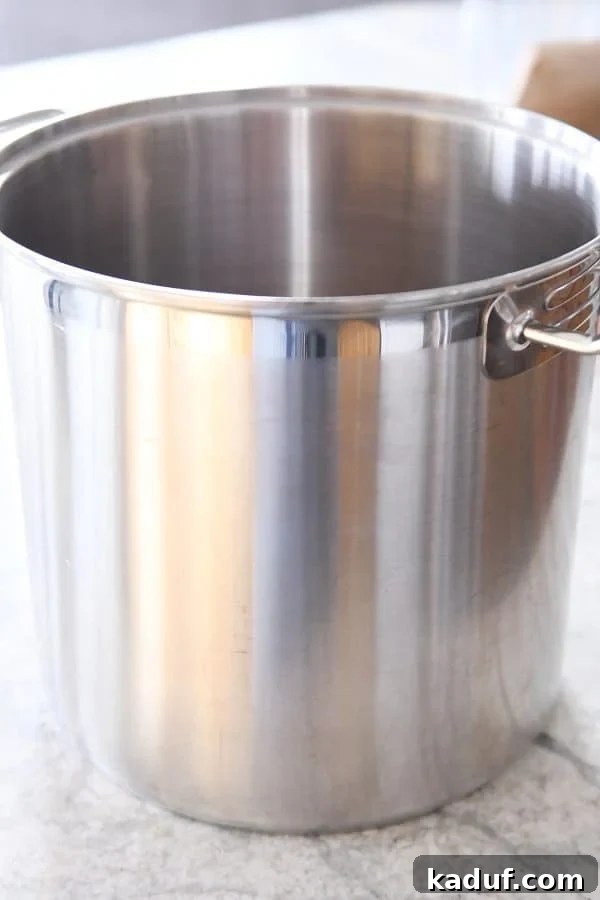
Selecting the Perfect Ham for This Recipe
The success of this extraordinary sweet baked ham recipe hinges significantly on the type of ham you choose. There are two critical factors to consider when making your selection:
- Avoid Spiral Sliced Hams: This is perhaps the most important directive. Do NOT use a pre-sliced or spiral-sliced ham. These hams are designed for quick heating and often dry out easily, especially with our unique boiling method. A whole, unsliced ham is essential to achieve the desired tenderness and shreddability. Spiral-sliced hams will simply fall apart into dry, individual slices during the boiling process, preventing them from absorbing the sweet glaze properly and leading to a disappointing result.
- Opt for Bone-In: While not as strictly vital as avoiding spiral-sliced, a bone-in ham is highly recommended. The bone contributes to a richer flavor and helps the meat retain moisture, resulting in an even more tender final product. As the ham cooks around the bone, the meat becomes exceptionally succulent. Many home cooks have successfully used unsliced boneless hams, reporting decent results. So, if a bone-in option isn’t available, an unsliced boneless ham can work, but a bone-in is truly ideal for maximizing tenderness.
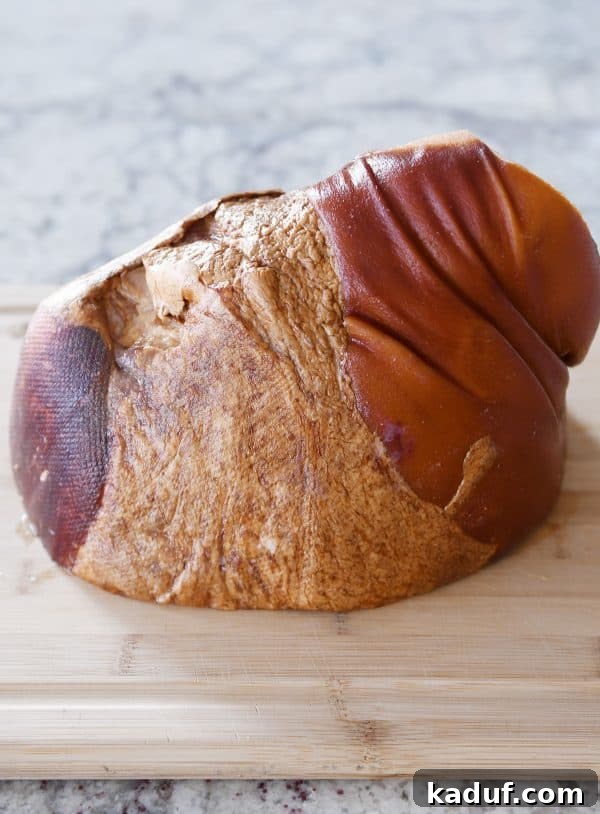
When shopping, look for cuts commonly labeled as shank hams or butt/shoulder hams. These are typically bone-in and unsliced, fitting the criteria perfectly for this sweet baked ham. These cuts are also usually more economical and packed with flavor, making them an excellent choice for this preparation.
As the ham undergoes its transformation in the simmering vinegar and water bath, the meat progressively softens. It reaches a point where it’s not just tender, but truly fall-off-the-bone tender. The meat fibers become so relaxed that they practically melt in your mouth, a texture that is simply unattainable through traditional baking methods alone.
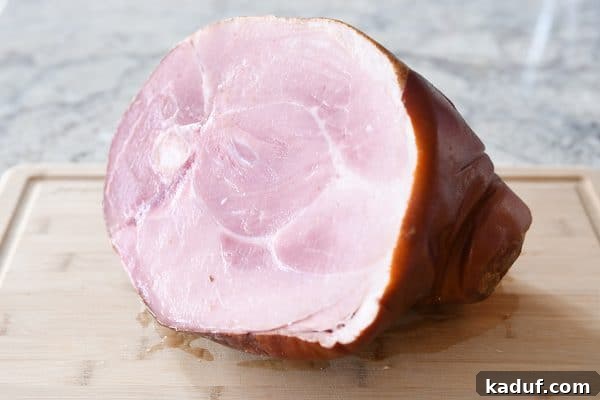
One common concern with this method is the potential for a strong vinegar smell during the boiling process. While your kitchen might take on a distinct aroma, it’s a temporary inconvenience for a magnificent reward. To minimize the scent, ensure good ventilation: open windows, use your kitchen’s exhaust fan, or even consider cooking the ham outdoors on a propane stove, as some enthusiasts do. The important thing to remember is that this aroma doesn’t translate to a strong vinegar taste in the finished ham; it merely contributes to its incredible tenderness and a subtle, pleasant tang that beautifully complements the sweet glaze.
The cooking time for the ham in the vinegar bath will vary, primarily depending on the size of your ham and the intensity of your simmer. The goal is not just to cook it through, but to achieve a state where the meat is so tender it practically shreds itself. This could range from two to four hours. Keep an eye on the liquid level, adding more water and vinegar in the correct ratio if it reduces too much, ensuring the ham remains mostly submerged throughout the cooking process.
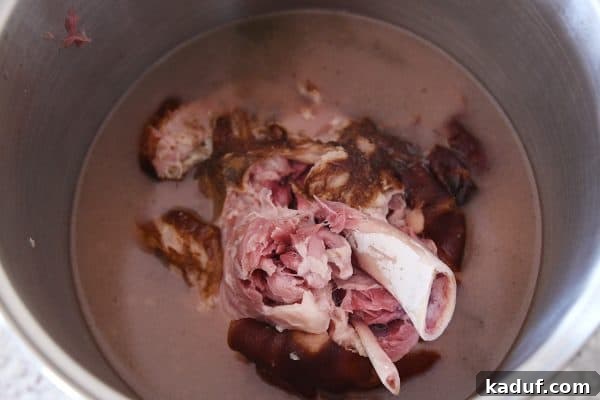
Once the ham has reached its optimal tenderness, carefully remove it from the pot. A large rimmed baking sheet or cutting board is ideal for this step, as it helps contain any residual juices. Allow the ham to cool sufficiently so it’s comfortable to handle. This cooling period also allows the meat to reabsorb some of its juices, further enhancing its succulence.
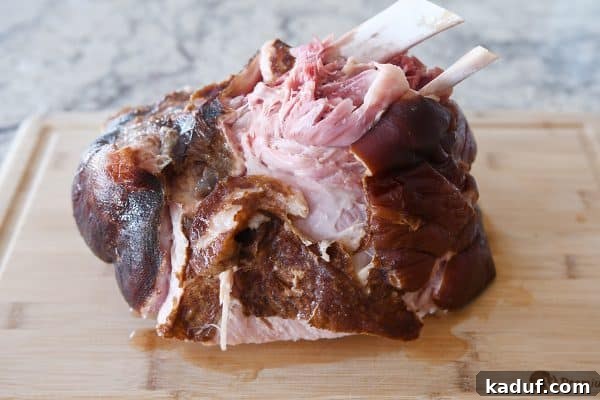
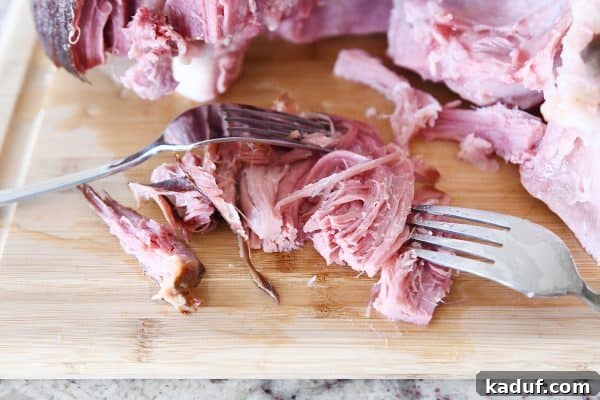
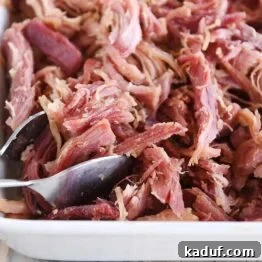
With the ham cooled, it’s time for the satisfying task of shredding. The meat should pull away from the bone with minimal effort, easily yielding to two forks or even your hands. Discard the bone and any excess fat, focusing on creating beautifully shredded pieces of ham that are ready to absorb the incredible sweet glaze.
Convenient Make-Ahead Tips for Stress-Free Entertaining
One of the many advantages of this sweet baked ham recipe is its adaptability for make-ahead preparation, making it perfect for holiday gatherings or busy weeknights. The initial boiling and shredding steps can be completed several days in advance. Simply cook and shred the ham, then store the tender meat in an airtight container in the refrigerator until you’re ready for the final baking stage. This flexibility significantly reduces last-minute stress, allowing you to focus on other aspects of your meal.
When you’re ready to bake, the shredded ham is generously layered with a simple yet incredibly flavorful mixture of brown sugar and dry mustard. This combination creates a rich, sweet, and slightly pungent glaze that perfectly complements the tangy undertones of the vinegar-cooked ham. The shredded texture of the ham allows every piece to be thoroughly coated and caramelized in this delicious sauce, ensuring an explosion of flavor in every bite.
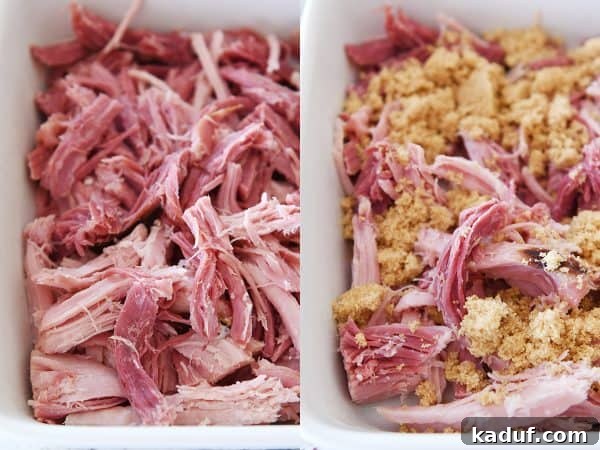
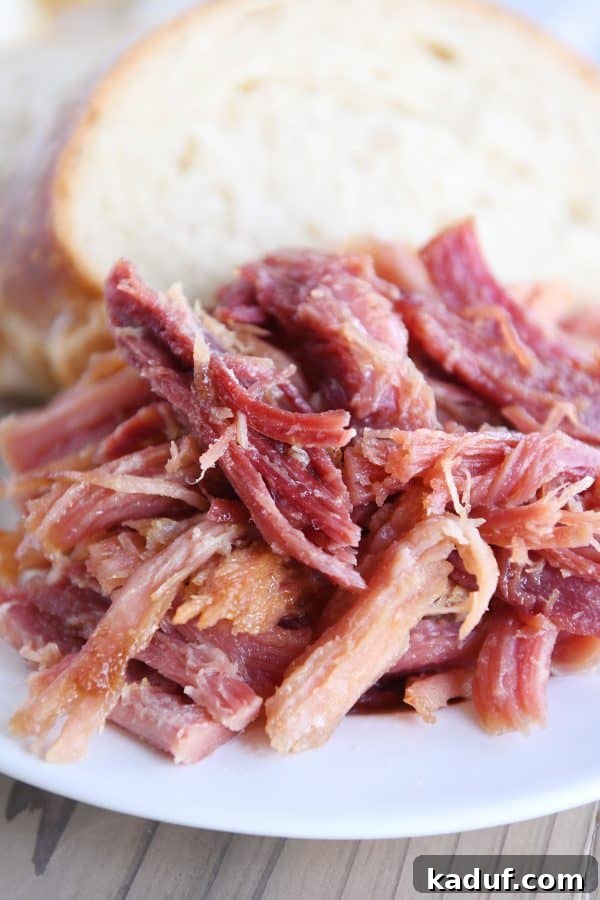
The final baking stage, typically around an hour, allows the brown sugar to melt and meld with the ham, forming a glossy, succulent sauce. The ham emerges from the oven incredibly tender, coated in this sweet, tangy, and irresistible glaze. The contrast between the initial savory and slightly tart preparation and the final sweet finish is what makes this sweet baked ham so uniquely delicious. It’s a symphony of flavors that will leave your taste buds singing and your guests asking for the recipe.
I genuinely promise that I am not overselling this. This sweet baked ham is truly unbelievably delicious – it’s an experience that’s almost unreal. Having made ham this way for years, it has become the only method we use for our Easter ham and other festive occasions. If you are searching for a new ham recipe that will impress your family and friends, this is absolutely the one to try. Prepare for compliments and requests for seconds!
Sweet Baked Ham FAQ’s: Your Questions Answered
- Can I make this with a boneless ham? While a bone-in ham (such as a shank ham) is preferred for its superior tenderness and flavor, an unsliced boneless ham can certainly be used. The crucial factor is that it must NOT be a spiral-sliced ham, as these will become dry and won’t shred properly with this cooking method.
- Can I make this in the Instant Pot? Absolutely! For a faster initial cooking process, you can cook the ham until shreddable in an Instant Pot. You’ll still follow the same ratio of water to vinegar. Once shredded, transfer the ham to a baking dish and finish it in the oven with the brown sugar mixture for that perfect caramelized glaze. Find specific Instant Pot instructions here.
- Can I cook the ham in the vinegar and water in the slow cooker? Many readers have reported great success cooking the ham in the vinegar and water mixture in a slow cooker. This method offers a “set it and forget it” approach for the initial tenderizing step, especially if you have a slow cooker large enough to accommodate your ham.
- Can this sweet baked ham be made ahead of time? Yes, this recipe is perfect for make-ahead preparation. The ham can be boiled and shredded up to several days in advance and stored in the refrigerator. You can also assemble the entire dish with the brown sugar and mustard mixture a day prior to baking. For optimal taste and texture, it is best baked and served warm right before your meal.
- Can the shredded and baked ham be frozen? Yes! Leftovers of this sweet baked ham freeze beautifully. Allow the ham to cool completely, then store it in an airtight, freezer-safe container or bag for up to 2-3 months. Thaw in the refrigerator overnight and reheat gently in the oven or on the stovetop.
- What if my ham isn’t falling apart tender after cooking? If your ham isn’t as tender as desired after the initial cooking time, simply add more liquid (maintaining the 2:1 water to vinegar ratio) and continue simmering. The tenderness will increase with more cooking time. It’s always better to cook it a little longer than to have it tough.
Perfect Accompaniments for Your Sweet Baked Ham
This sweet baked ham is a showstopper on its own, but pairing it with the right side dishes can elevate your meal even further. Its rich, sweet, and tangy profile makes it incredibly versatile. Here are some fantastic serving suggestions:
- Fluffy Biscuits or Rolls: The tender, shredded ham is heavenly when piled into warm, buttery biscuits. Try these light and airy Buttermilk Biscuits or quick-to-make Cream Biscuits. They’re perfect for soaking up every drop of that delicious glaze.
- Classic Potato Sides: Potatoes are a timeless pairing with ham. Consider serving Homemade Baked Tater Tots for a fun, comforting side, or opt for creamy mashed potatoes, scalloped potatoes, or a simple roasted potato medley.
- Fresh Salads and Vegetables: A crisp green salad with a light vinaigrette can cut through the richness of the ham. Steamed asparagus, roasted brussels sprouts, or green beans almondine also make wonderful, vibrant additions to your plate.
- Deviled Eggs: For a holiday meal or special occasion, Classic Deviled Eggs offer a creamy, savory contrast that’s always a crowd-pleaser.
- Coleslaw or Apple Sauce: The slight acidity and freshness of a good coleslaw or homemade applesauce provide an excellent counterpoint to the sweetness of the ham glaze.
Sweet Baked Ham
Pin
Rate
SaveSaved!
Ingredients
- 5-7 pound precooked bone-in ham (see note)
- White distilled vinegar
- Water
- 1 cup brown sugar
- 1 ½ tablespoons ground dry mustard
Instructions
-
Place the ham in a very large pot (select a pot larger than you anticipate, as the liquid will be quite active during cooking). Cover the ham with a mixture of 2 parts water to 1 part white distilled vinegar, ensuring the ham is submerged by at least an inch or two of liquid.
-
Bring the liquid to a rolling boil over high heat. Once boiling, reduce the heat to medium-low to maintain a vigorous simmer and continue cooking for 2-3 hours. The ham is ready when the meat easily falls off the bone, indicating extreme tenderness. If needed, extend the cooking time further until this tenderness is achieved. Monitor the liquid level throughout; if it reduces significantly, add more water and vinegar (maintaining the 2:1 ratio) to keep the ham mostly covered.
-
Once cooked to perfection, carefully remove the ham from the pot and place it onto a rimmed sheet pan or large cutting board. Discard the cooking liquid. Allow the ham to cool until it is comfortable enough to handle, making the meat removal process easier.
-
In a small bowl, combine the brown sugar and ground dry mustard, stirring until well mixed.
-
Shred the tender ham, removing and discarding any bones and excess fat. Place half of the shredded ham evenly into a 9×9-inch baking dish (or a dish of similar size). Sprinkle half of the brown sugar and mustard mixture over this first layer of ham. Then, layer the remaining ham on top and sprinkle with the rest of the brown sugar mixture.
-
Cover the baking dish tightly with aluminum foil. Bake in a preheated oven at 325 degrees Fahrenheit (160 degrees Celsius) for 1 hour. Serve warm, straight from the oven, or at room temperature, as preferred.
Notes
Ham Size: This recipe is designed for a 5-7 pound ham, but you can certainly use a larger ham. Remember to adjust the pot size accordingly to ensure the ham is fully submerged in the cooking liquid. If using a larger ham, you may also need to increase the quantities of the brown sugar and mustard mixture to adequately coat the extra meat. For very large hams, some individuals use an outdoor propane stove with a massive pot.
Make-ahead: To simplify meal preparation, the ham can be boiled and shredded up to 2-3 days in advance and stored in the refrigerator. The assembled dish, with the brown sugar mixture, can also be prepared a day ahead of time and refrigerated until baking.
Cooking Time: While tenderness is key, avoid over-boiling the ham excessively, as this could lead to a less desirable texture. If you’re concerned about cooking time, aim to remove the ham after approximately 2 hours; it should still be very tender, even if some parts require a bit more effort to pull from the bone. The goal is easy shreddability, not complete disintegration.
Recommended Products
Recipe Inspiration: This incredible recipe was shared by my dear friend, Mel B., whose impeccable taste in food never ceases to amaze.