
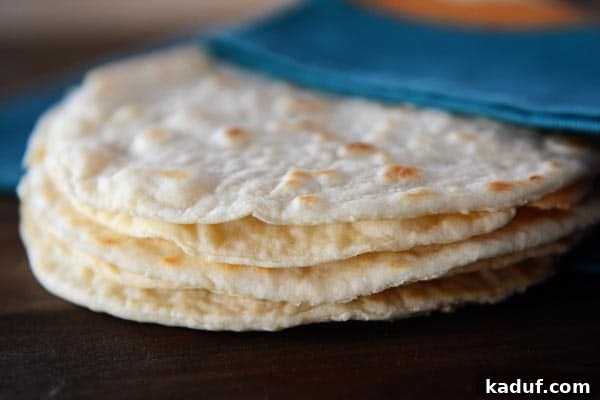
Discover the ultimate guide to crafting perfect homemade tortillas, whether you prefer classic white flour or wholesome whole wheat! This easy-to-follow, step-by-step tutorial will elevate your culinary skills, proving that fresh tortillas are not only simpler to make than you think but also infinitely more delicious than anything store-bought.
Unlocking the Secret to Perfect Homemade Tortillas: A Step-by-Step Guide
For years, the dream of making truly exceptional homemade tortillas lingered on my cooking bucket list. Like many aspiring home bakers, I embarked on numerous attempts, often met with frustration and a stack of dry, crackly, less-than-appetizing results. There were moments I almost threw in the towel, exclaiming that “homemade tortillas are highly overrated!” However, through persistence and a mountain of experimentation (and yes, a few dramatic culinary mishaps), I finally perfected a recipe that’s not just foolproof but utterly transformational.
This isn’t just any tortilla recipe; it’s a versatile foundation that effortlessly adapts to both unbleached all-purpose flour and robust whole wheat flour. What makes it truly special is its forgiving nature and straightforward process. I can now confidently say that creating homemade tortillas is far less daunting than I once imagined. In fact, I suspect I was overcomplicating the process all along, a common pitfall in the pursuit of culinary perfection.
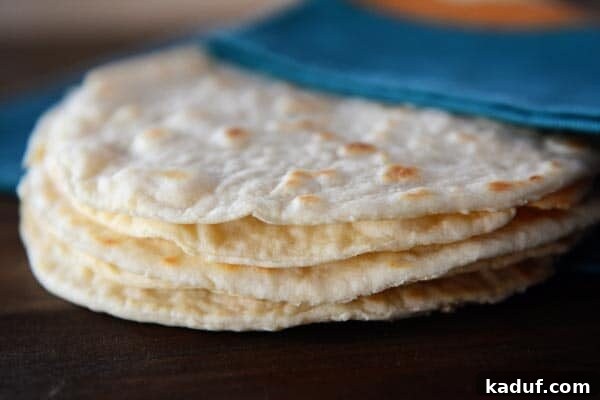
White vs. Whole Wheat: Choosing Your Perfect Tortilla
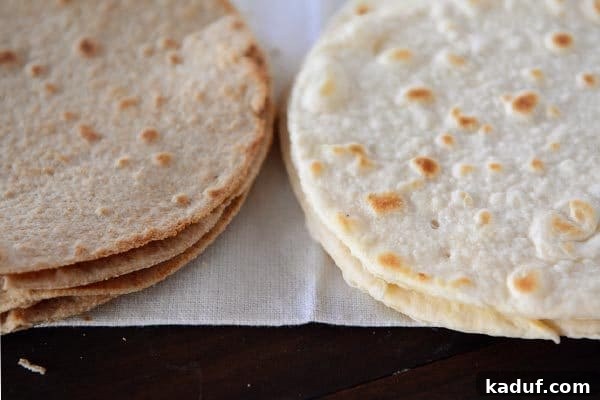
My journey into homemade tortillas was particularly driven by a desire for a delicious whole wheat version. While this recipe delivers an excellent one, it’s crucial to understand a fundamental truth, learned through at least eight test batches: 100% whole wheat tortillas, by their very nature, will never achieve the same delicate lightness and fluffiness as their white flour counterparts. This isn’t a critique of whole wheat – I deeply appreciate its nutritional value and hearty texture. Whole wheat tortillas are wonderfully delicious, nourishing, and satisfying.
However, white flour tortillas are in a league of their own. They are so tender and exquisitely divine, you might even consider serving them for dessert! Their unparalleled softness and delightful chewiness are truly mind-blowingly yummy. For those seeking the best of both worlds – a balance of nutrition and tender perfection – I’ve found that a 50/50 blend of whole wheat and white flour yields the most satisfying results. This hybrid approach offers a rich flavor profile and a texture that is both soft and wholesome. The beauty of this recipe is its flexibility; feel free to experiment with different flour ratios to discover your personal favorite.
Simplicity at Its Best: The Magic Behind This Easy Tortilla Recipe
Regardless of your flour preference, the truly good news is how incredibly simple this homemade tortilla recipe is. At its core, you’re merely combining three dry ingredients – flour, salt, and baking powder – with a bit of shortening or coconut oil, and warm water. I’ve personally tested both shortening and coconut oil, and can attest that coconut oil works absolute wonders, imparting a subtle, pleasant flavor and contributing to the tortillas’ tender texture.
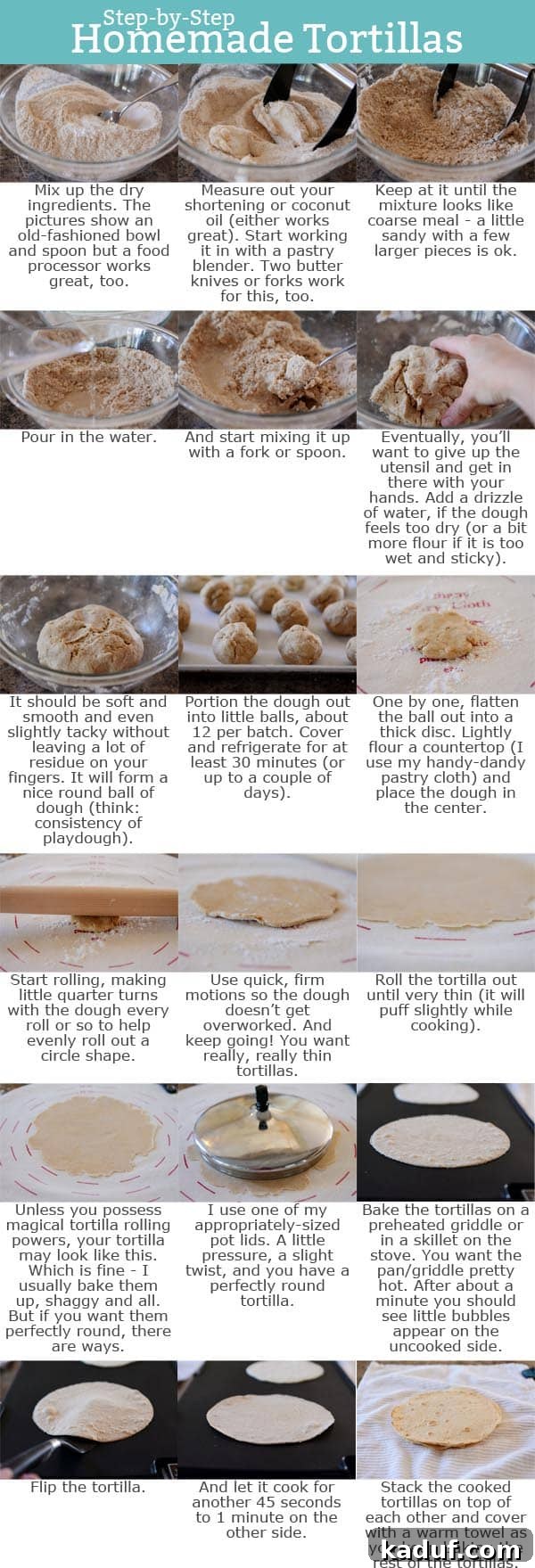
Beyond the basic mixing, the process involves a few simple steps, including a clever kitchen hack I’ll share to help you achieve perfectly round tortillas every time. You’ll find detailed step-by-step pictures below to guide you through each stage, making the process intuitive and enjoyable, even for novice cooks.
Why Homemade Tortillas Are a Game Changer
- Unmatched Flavor & Freshness: The taste of a warm, freshly cooked tortilla is incomparable. Store-bought versions simply can’t compete with the nuanced flavors and soft texture of homemade.
- No Preservatives: You control every ingredient, ensuring your tortillas are free from artificial additives, dough conditioners, or unnecessary preservatives.
- Customizable: Easily adjust the flour type, fat, and even add herbs or spices to tailor them to your preference.
- Cost-Effective: Making tortillas from scratch is significantly cheaper than buying them pre-made, especially if you consume them frequently.
- Fun for the Whole Family: The process can be a delightful activity to share with family, and kids especially love helping roll the dough.
A Family Favorite: Fast, Fresh, and Devoured Instantly
I recall making a recent batch of these tortillas when my kids were unexpectedly home from school. The moment they caught the scent of freshly cooking bread, they swarmed the kitchen. They were snatching the warm tortillas right off the griddle, slathering them with butter, and devouring them as fast as I could cook them. And thankfully, these tortillas cook incredibly quickly – only about two minutes per tortilla, making them arguably the fastest homemade bread you can whip up!
My grand plan was to stock the freezer with a reserve supply, but as often happens in a busy household, those dreams quickly evaporated. Instead of filling the freezer, I happily filled hungry bellies. Such is the story of my life, and frankly, there’s no greater satisfaction than seeing loved ones enjoy food made with care.
Key Ingredients for Your Perfect Tortillas
- Flour: Whether you choose unbleached all-purpose, whole wheat, or a blend, flour forms the foundation. All-purpose yields a lighter, more pliable tortilla, while whole wheat adds nutritional value and a hearty chew.
- Salt: Essential for flavor, don’t skip it!
- Baking Powder: This provides a slight lift and contributes to the tortillas’ soft, pliable texture, preventing them from being dense or stiff.
- Shortening or Coconut Oil: The fat component is crucial for tenderness and flexibility. Shortening is traditional, but coconut oil is an excellent dairy-free alternative that also adds a subtle flavor. You can also experiment with lard for a more authentic, rich taste.
- Warm Water: The temperature of the water is important. Warm water helps activate the gluten just enough and aids in creating a smooth, workable dough. Adjust the amount gradually as humidity and flour type can affect absorption.
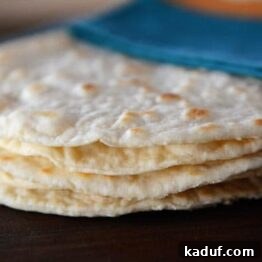
Homemade Tortillas {White & Whole Wheat Versions!}
★
★
★
★
Pin Recipe
Rate Recipe
Ingredients
- 2 ½ cups (355 g) unbleached all-purpose or whole wheat flour
- 1 ¼ teaspoon salt
- 1 teaspoon baking powder
- 6 tablespoons shortening or coconut oil (see note)
- ¾ – 1 cup warm water, about 110 degrees F
Instructions
-
In a large bowl, combine the flour, salt, and baking powder. Add the shortening or coconut oil. Using a pastry blender, two forks, two butter knives, or your fingertips, blend the fat into the dry mixture until it resembles coarse meal with some larger pea-sized pieces remaining. This step is crucial for achieving tender, flaky tortillas.
-
Gradually stir in the warm water until combined. For whole wheat tortillas, you’ll typically need to add slightly more water, sometimes upwards of 1 cup, to achieve a soft, smooth, playdough-like consistency. White flour tortillas usually require less water, often around 3/4 cup plus 2 tablespoons in an average kitchen environment. The exact amount can vary based on humidity and altitude, so add water slowly, a teaspoon at a time, if the dough appears too dry or starts cracking. The goal is a dough that is soft but not sticky.
-
As you add water, you’ll eventually need to put aside your spoon and use your hands to lightly knead the dough. Knead just until a smooth, uniform ball forms, usually 1-2 minutes. Avoid over-kneading, which can make the tortillas tough. Once formed, portion the dough into 12 equal balls, each weighing approximately 1.75 to 2 ounces. Cover the dough balls tightly with plastic wrap or a damp towel to prevent drying and refrigerate for at least 30 minutes. This resting period allows the gluten to relax, making the dough much easier to roll, and can be extended for a couple of days.
-
To cook your tortillas, heat a nonstick griddle or a heavy cast iron skillet to medium-high heat. The key is to get the cooking surface hot enough that each tortilla cooks completely in about two minutes – roughly one minute per side. A well-heated griddle ensures a quick cook and prevents dryness.
-
Lightly flour your counter or a pastry cloth. Take one dough ball and roll it out into an 8-inch circle. If the dough springs back or is difficult to roll, cover it and let it rest for another 5-10 minutes at room temperature. This relaxation time helps the dough become more pliable. For perfectly round tortillas, you can roll it out, then use a round plate or bowl as a guide to trim the edges with a knife, though this isn’t strictly necessary for delicious results.
-
Place a rolled tortilla onto the hot griddle. Cook for about one minute on the first side, until small bubbles begin to appear on the uncooked surface and light brown spots form underneath. Flip the tortilla and cook for another minute. It should puff up slightly, indicating it’s cooking through and becoming soft. Be careful not to overcook, as this is the primary cause of dry, stiff, and crackly tortillas. Whole wheat tortillas are particularly susceptible to overcooking.
-
As each tortilla finishes cooking, stack them on top of each other on a clean kitchen towel or in a tortilla warmer. Cover them immediately. The warmth and steam from each freshly cooked tortilla will keep the others soft and pliable while you finish cooking the rest.
-
Cooked and cooled tortillas can be stored in an airtight container or zip-top bag in the refrigerator for 3-4 days. For longer storage, freeze them for up to a month. Reheat gently in a dry skillet, microwave, or oven until warm and soft.
Notes
Mixing the Dough: Processor vs. Hand: For clarity and accessibility, I’ve provided step-by-step instructions for mixing the dough by hand, as not everyone has the same kitchen equipment. However, for those with a food processor, it is an excellent tool for quickly blending the fat into the flour and forming the dough. If you have one and don’t mind the cleanup, it’s a highly efficient option for mixing. Ensure not to overmix, regardless of method.
Choosing Your Oil: When using coconut oil as your fat, you have the choice between extra-virgin and refined. Extra-virgin coconut oil imparts a subtle, sweet coconut flavor, which I find quite pleasant and not at all bothersome. If you prefer a completely neutral flavor, opt for refined coconut oil, or stick with traditional shortening.
Flour Variations: This tutorial provides instructions for both white and whole wheat tortillas. The primary difference lies in the water content required, as whole wheat flour absorbs more liquid. While 100% whole wheat tortillas are the most nutritious choice, they will inherently be denser and less airy than their white flour counterparts. My personal favorite, offering a delightful balance of flavor, texture, and nutrition, is a 50/50 blend of white flour and whole wheat flour. Remember to add water gradually until your dough reaches a wonderfully soft and smooth consistency, regardless of your chosen flour type.
Recommended Products
Tips for Tortilla Success
- Keep the Dough Covered: Always cover your dough balls (and any rolled-out tortillas waiting to be cooked) to prevent them from drying out, which leads to crackly, stiff tortillas.
- Don’t Over-Flour: Use just enough flour on your rolling surface to prevent sticking. Too much flour can make your tortillas tough.
- Gradual Water Addition: The amount of water can vary significantly based on flour type and environmental humidity. Always add water gradually, a tablespoon at a time, until your dough is soft, smooth, and pliable. It should not be sticky.
- Rest is Best: The resting period for the dough is crucial. It allows the gluten to relax, making the dough much easier to roll and ensuring a tender final product. Don’t skip it!
- Hot Griddle, Quick Cook: Ensure your griddle or skillet is hot enough before placing the tortilla. A hot pan cooks the tortilla quickly, preventing it from drying out and achieving those desirable puffed pockets.
- Practice Makes Perfect: Don’t get discouraged if your first few tortillas aren’t perfectly round or don’t puff up perfectly. With a little practice, you’ll be a tortilla-making pro in no time!
Serving Suggestions: Beyond the Basic Taco
While homemade tortillas are undoubtedly magnificent for tacos and burritos, their versatility extends far beyond. Imagine them:
- Warm, slathered with butter, and sprinkled with cinnamon sugar for a simple dessert.
- As the base for gourmet quesadillas, filled with cheeses, meats, and vegetables.
- Rolled up with breakfast fillings like eggs, beans, and cheese for a hearty breakfast burrito.
- Cut into wedges, baked or fried, and served with salsa or guacamole as homemade chips.
- Used to make crispy enchiladas, soft wraps for lunches, or even as a rustic flatbread for dipping into hummus or soup.
- Wrapped around grilled meats and fresh veggies for an incredible street-style fajita.
This comprehensive recipe for homemade tortillas is a distillation of insights gleaned from countless culinary experiments and inspirations drawn from various traditional recipes, refined to deliver the best possible results.