
Pomegranates, with their jewel-like arils and vibrant flavor, are a true delight of nature. This ancient fruit, celebrated across cultures for its beauty and health benefits, offers a unique blend of sweet and tart notes that can elevate any dish. From refreshing salads and hearty breakfasts to decadent desserts and sophisticated cocktails, the versatility of pomegranate seeds, also known as arils, is simply unmatched. However, for many, the joy of consuming a pomegranate is often overshadowed by the perceived challenge of extracting these precious seeds. Unlike a strawberry you can simply pop into your mouth, a pomegranate demands a bit more finesse.
The good news is that preparing a pomegranate doesn’t have to be a messy or daunting task. With the right technique, you can efficiently deseed this magnificent fruit, unlocking its full potential and making it a regular, enjoyable part of your diet. This comprehensive guide will walk you through a simple, clean, and highly effective method for desceding pomegranates, ensuring you get to savor every succulent aril without the frustration. We’ll also delve into why pomegranates are worth the effort, offering a glimpse into their incredible health benefits and myriad culinary applications.
The Undeniable Allure of Pomegranates: More Than Just a Pretty Face
Before we dive into the practical steps of deseeding, let’s take a moment to appreciate why pomegranates are so highly coveted. Beyond their stunning appearance and delightful taste, these ruby-red gems are powerhouse fruits packed with nutrition.
A Nutritional Goldmine
Pomegranates are renowned for their exceptional antioxidant properties. They are rich in punicalagins, which are potent antioxidants responsible for most of the fruit’s antioxidant power. These compounds offer significant protection against free radical damage, contributing to overall cellular health and potentially reducing the risk of various chronic diseases. Additionally, pomegranates are an excellent source of:
- Vitamin C: Essential for immune function and skin health.
- Vitamin K: Crucial for blood clotting and bone health.
- Folate: Important for cell growth and function.
- Potassium: A key mineral for maintaining healthy blood pressure and fluid balance.
- Fiber: Aids in digestive health, promotes satiety, and helps regulate blood sugar levels.
Incorporating pomegranates into your diet can support heart health, reduce inflammation, and even boost exercise performance, making them a true superfood.
Culinary Versatility
Once you master the art of deseeding, a world of culinary possibilities opens up. Pomegranate arils add a burst of flavor, vibrant color, and delightful texture to a wide array of dishes. Imagine them:
- Sprinkled over a fresh green salad with feta and walnuts.
- Mixed into your morning yogurt, oatmeal, or smoothie bowl.
- As a stunning garnish for roasted meats or grilled vegetables.
- Infused into refreshing beverages, cocktails, or sparkling water.
- Adding a tart contrast to sweet desserts like pavlova or chocolate bark.
The juice, extracted from the arils, is equally beneficial and delicious, perfect for making sauces, marinades, or simply enjoyed on its own.
Overcoming the Pomegranate Paradox: Why Deseeding Can Be Tricky
It’s no secret that the intricate structure of a pomegranate can deter even the most enthusiastic fruit lover. The tough outer rind, the bitter white pith, and the numerous tightly packed seeds often lead to a messy kitchen, stained clothes, and a sense of defeat. Traditional methods involving forceful tapping or haphazard cutting can result in juice splatters everywhere and many precious arils going to waste. This guide aims to turn that frustration into a satisfying, mess-free experience.
Preparing for Success: Gathering Your Tools
Before you begin, gather the following simple tools to ensure a smooth and efficient deseeding process:
- One fresh pomegranate
- A sharp kitchen knife
- A sturdy cutting board
- A large bowl filled with cool water
- A slotted spoon (not strictly necessary until the end, but good to have ready)
The Simple Way to Deseed a Pomegranate: A Step-by-Step Guide
Follow these steps closely, and you’ll be enjoying your fresh pomegranate arils in no time.
Step 1: Preparing Your Pomegranate for Deseeding
Begin by placing your beautiful, ripe pomegranate on a clean, sturdy cutting board. Ensure your knife is sharp, as this will make the initial cuts much easier and safer. A dull knife can slip, causing injury or an uneven cut. Take a moment to examine the pomegranate; you’ll notice its unique crown at the top and the broader base.
Step 2: Removing the Crown
The crown of the pomegranate is the hard, knobby part at the top, often described as resembling a belly button. This section is purely ornamental and inedible. With your sharp knife, carefully slice off the crown, cutting just enough to expose the white pith and a hint of the arils beneath. Aim for a clean, shallow cut that removes the entire crown portion without cutting too deeply into the fruit itself, which could damage the precious seeds.
Once removed, discard the crown. This initial cut helps you identify the natural sections of the pomegranate, which will guide your subsequent scoring. You’ll notice the white membranes, or pith, radiating from the center, dividing the fruit into distinct segments.
Step 3: Scoring the Pomegranate
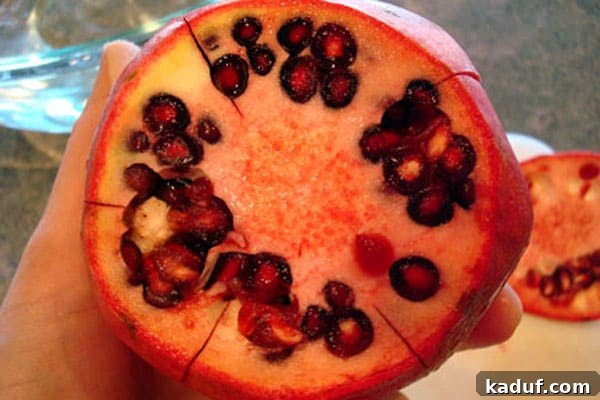
Now, take your knife and make several vertical scores (cuts) into the peel of the pomegranate. These scores should extend from the top, where you removed the crown, down to the base of the fruit. The goal is to slice only through the outer rind and part way into the pith, not deep enough to cut through the arils. You’ll want to make about five or six evenly spaced cuts around the circumference of the pomegranate. A useful tip is to align your cuts with the natural white membranes you saw after removing the crown. This minimizes the number of seeds you accidentally slice, ensuring more intact arils.
These scores act as guides, allowing you to easily pull apart the pomegranate into natural sections later. Don’t worry if your cuts aren’t perfectly aligned with the membranes; the soaking step will still make the separation much easier.
Step 4: The Soaking Method – A Game Changer for Clean Deseeding
This step is crucial for a mess-free and efficient deseeding process. After the pomegranate has been scored, gently place it cut-side down into a large bowl filled with cool water. Allow the pomegranate to soak for approximately 5-10 minutes. The water helps in two significant ways: first, it softens the pith, making it easier to separate from the arils; second, it helps the seeds release a little easier due to the slight expansion and softening of the fruit’s internal structure. This brief soak prepares the fruit for effortless disassembly.
Step 5: Gentle Disassembly in Water
After the allotted soaking time, submerge your hands into the bowl of water. While still underwater, begin to gently pull apart the sections of the pomegranate along the score lines you made earlier. The water acts as a natural splash guard, containing any potential juice bursts and preventing mess on your countertops or clothing. As you pull the sections apart, gently flex the peel and pith away from the seeds. Use your fingers to gently rub or pry the seeds off the membranes. The arils will naturally detach and sink to the bottom of the bowl, while the lighter pith and peel will float to the surface.
Continue this gentle process until most of the seeds have been released from their fibrous captivity. Work patiently, ensuring you collect as many of the beautiful arils as possible.
Step 6: Separating Arils from Pith
As you work, you’ll observe a fascinating phenomenon that makes for a great science lesson: the dense, heavy pomegranate seeds will sink to the bottom of the bowl, while the lighter, flimsy bits of pith and peel will float to the top. This natural separation is the key to achieving perfectly clean arils without tedious picking.
Using a slotted spoon, carefully skim off all the floating pieces of pith and peel from the surface of the water. Discard these fibrous bits. You may need to gently stir the water to encourage any lingering pith to float up. You can also use your hands to scoop out larger pieces. Once the majority of the debris is removed, you can gently swirl the water to see if any smaller pieces of pith are still attached to the seeds; if so, gently rub them off with your fingers.
Step 7: Final Rinse and Enjoyment
Once you’ve removed all the unwanted pith and peel, carefully drain the water from the bowl. You can use a fine-mesh strainer or simply tilt the bowl, holding back the seeds with your hand. What you’ll be left with is a stunning bounty of perfectly clean, intact pomegranate seeds, glistening like rubies. Take a moment to admire your handiwork!
Your beautiful pomegranate arils are now ready to be enjoyed! You can eat them fresh as a snack, add them to your favorite recipes, or store them for later use.
Tips for Success and Troubleshooting
- Choosing the Right Pomegranate: Look for pomegranates that are heavy for their size, indicating juiciness. The skin should be taut and firm, without any soft spots or blemishes.
- Dealing with Stubborn Pith: If some pith remains stubbornly attached, don’t worry. A quick rinse under cool running water while gently rubbing the arils can often dislodge any remaining bits.
- Alternative Method (Tapping): While the soaking method is generally cleaner, some people prefer to tap the pomegranate. After scoring and gently breaking into sections, hold a section cut-side down over a bowl and firmly tap the back of the rind with a wooden spoon. The arils will fall out. Be warned, this can be messier!
- Storage: Fresh pomegranate arils can be stored in an airtight container in the refrigerator for up to 5-7 days. For longer storage, you can freeze them in a single layer on a baking sheet, then transfer them to a freezer-safe bag. They can last for several months and are great for smoothies or baking directly from frozen.
Beyond Deseeding: Elevating Your Culinary Creations
Now that you’re a pomegranate deseeding expert, let’s explore more ways to incorporate these vibrant arils into your diet and impress your family and friends:
- Breakfast Booster: Sprinkle them over Greek yogurt with a drizzle of honey, add them to your morning oatmeal for a burst of flavor and texture, or blend them into your favorite smoothie for an antioxidant kick.
- Salad Sensation: Pomegranate seeds are a game-changer for salads. Their tartness beautifully complements savory ingredients like goat cheese, roasted chicken, or even a simple vinaigrette.
- Dessert Delight: Use them as a colorful and tangy topping for cheesecakes, ice cream, fruit tarts, or chocolate desserts. They add a sophisticated touch and cut through richness.
- Savory Pairings: Don’t limit pomegranates to sweet dishes. They pair wonderfully with roasted lamb, duck, or even in a fresh salsa served with fish tacos.
- Refreshing Drinks: Muddle some arils into cocktails like margaritas or mojitos, or simply add them to sparkling water with a slice of lime for a healthy, beautiful beverage.
Conclusion: Embrace the Pomegranate Journey
The journey from a whole, enigmatic pomegranate to a bowl of glistening, ready-to-eat arils is a rewarding one. By following this simple, mess-free method, you can transform what once seemed like a daunting task into an enjoyable and effortless process. No longer will the fear of sticky counters or stained clothes prevent you from enjoying this incredible superfood.
Embrace the vibrant flavor, abundant health benefits, and endless culinary possibilities that pomegranates offer. Make them a regular feature in your kitchen, adding a touch of elegance and a wealth of nutrition to your meals. So go ahead, pick up a pomegranate, and get ready to unlock its delicious secrets. Happy deseeding!