
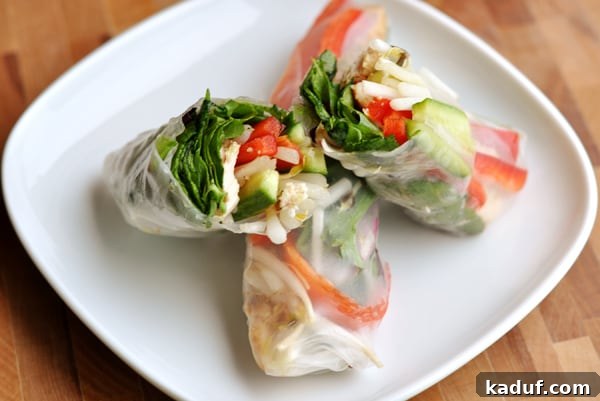
Ultimate Guide to Fresh Vietnamese Spring Rolls (Goi Cuon): An Easy & Healthy Recipe
Discover the vibrant flavors and incredible freshness of homemade Vietnamese Spring Rolls (Goi Cuon)! This recipe is surprisingly easy to make and packed with so many delicious vegetables, you’ll love every healthy bite without even realizing how much goodness you’re consuming.
For too long, the idea of making authentic Vietnamese spring rolls at home seemed like a culinary Everest. It felt like a dish reserved for expert chefs or specialized restaurants. However, I’m thrilled to report that this perception couldn’t be further from the truth! Crafting these delightful rolls in your own kitchen is not only straightforward but also incredibly rewarding. You’ll be amazed at how quickly you can master the technique, transforming simple ingredients into a gourmet experience.
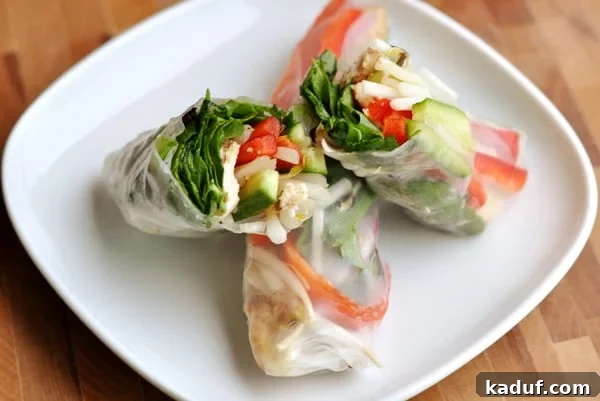
Why You’ll Fall in Love with This Fresh Spring Roll Recipe
Vietnamese spring rolls are a culinary masterpiece, celebrated for their delicate textures and explosive flavors. This recipe perfectly encapsulates everything wonderful about them. Imagine the crisp, cool sensation of fresh vegetables, the savory depth of perfectly marinated meat, and the tender chewiness of the rice paper wrapper, all brought together by an irresistible dipping sauce. It’s a symphony of textures and tastes that brightens any meal.
Beyond their incredible taste, these spring rolls are a powerhouse of nutrition. They’re an excellent way to boost your daily vegetable intake, offering a light yet satisfying meal option. The beauty of this dish lies in its balance – it’s both indulgent and incredibly wholesome. Whether you’re a seasoned cook or a kitchen novice, this guide will walk you through every step, ensuring a successful and delicious outcome.
The Heart of the Roll: Flavorful Fillings and a Divine Dipping Sauce
Every great spring roll relies on two key components: a dynamic filling and an exceptional dipping sauce. Our recipe features a succulent, Thai-inspired marinated chicken, which adds a fantastic savory protein element. The marinade, a harmonious blend of lime, brown sugar, fish sauce, garlic, and a hint of chili, infuses the chicken with layers of sweet, tangy, and umami flavors. This prepares the chicken to be a perfect counterpoint to the fresh, vibrant vegetables.
But let’s be honest, the dipping sauce is often what truly elevates a spring roll from good to unforgettable. Our Hoisin Peanut Dipping Sauce is the “icing on the cake,” or rather, the perfect accompaniment to your roll. It’s rich, creamy, and wonderfully balanced, with the sweetness of hoisin, the nutty depth of peanut butter, the zing of rice vinegar, and the aromatic kick of garlic and chili-garlic paste. This sauce doesn’t just complement the rolls; it transforms each bite into an exquisite experience, creating a craveable combination that will have you reaching for more.
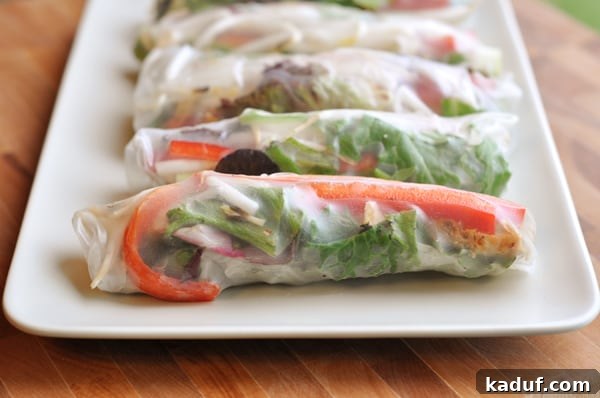
Sourcing Ingredients: Easier Than You Think!
For those new to Asian cuisine, the ingredient list might seem a little daunting. You might wonder if specialty items like rice paper wrappers or fish sauce are difficult to find. Let me reassure you: these ingredients are far more accessible than you might imagine! Even in areas without large Asian markets, most well-stocked larger grocery stores now carry a wide array of international foods. I personally live in a place far from major metropolitan centers, and I can easily locate all the necessary components for these spring rolls.
Rice paper wrappers, often found in the international or Asian aisle, come in various sizes; 10-inch wrappers are ideal for a substantial roll. Fish sauce and hoisin sauce are also common staples. Don’t be shy to ask a store associate if you can’t find something, or simply look for “rice paper” or “spring roll wrappers.” The fresh vegetables – bean sprouts, bell peppers, cucumbers, lettuce, and herbs – are readily available in any produce section.
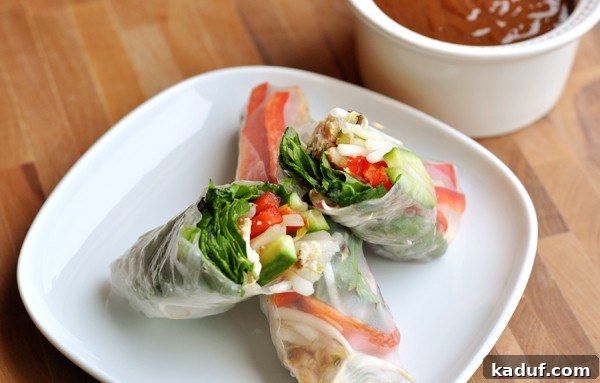
What to Serve With Your Vietnamese Spring Rolls
Vietnamese Spring Rolls are incredibly versatile and can be enjoyed as a light lunch, a refreshing appetizer, or even as part of a larger meal. Their fresh, clean flavors pair wonderfully with a variety of dishes. Here are some suggestions to round out your meal:
- Grilled Rosemary Buttermilk Chicken: The herby, savory notes of a grilled chicken dish provide a delightful contrast to the crisp freshness of the spring rolls. This combination offers a hearty protein option without being overly heavy.
- Fresh Fruit or a Light Fruit Salad like this Honey Lime Fruit Salad: The natural sweetness and acidity of fresh fruit are perfect for cleansing the palate between bites of savory spring roll. A bright fruit salad adds another layer of freshness and color to your table.
- Hummus with Chips or Crackers: While not traditionally Vietnamese, hummus offers a creamy, earthy texture that can be a comforting side. Opt for a simple, light hummus to keep the meal balanced.
- Coconut Rice: A fragrant and slightly sweet coconut rice can be a wonderful side dish, adding a tropical touch and a soft texture that complements the crunch of the rolls.
- Light Cucumber Salad: A simple salad with thinly sliced cucumbers, a touch of rice vinegar, and a sprinkle of sesame seeds can amplify the fresh vegetable theme of the meal.
One Year Ago: Chicken Gyros
Two Years Ago: Chicken with Mushrooms and Zucchini
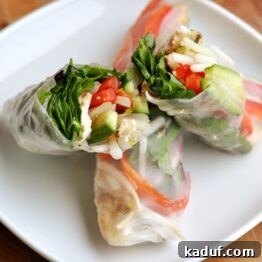
Vietnamese Spring Rolls {A How-To Guide}
6
Servings
1 hour
35 minutes
10 minutes
1 hour
45 minutes
Pin
Ingredients
For the Rolls:
- 2 pounds chicken breasts or boneless pork chops
- About 30 (10-inch) spring roll wrappers, rice, tapioca, etc.
- 1 pound fresh bean sprouts
- 1 red bell pepper, cored and sliced thin
- 1 large English cucumber, cut into thin strips
- 1 large bunch of fresh herbs, washed (I used basil and cilantro)
- 1 large bunch of fresh lettuce leaves, washed
- Warm water in a large shallow bowl or pie plate, large enough to accommodate a spring roll wrapper
Meat Marinade:
- Juice of 2 limes
- 2 tablespoons brown sugar
- 2 tablespoons fish sauce
- 4 cloves garlic, minced
- 1 teaspoon chile-garlic paste to taste
Hoisin Peanut Dipping Sauce:
- 8 oz hoisin sauce, the Y&Y brand is gluten-free
- ¼ cup smooth peanut butter
- 1 tablespoon rice vinegar
- 2 cloves garlic, crushed or pressed through a garlic press
- ½ teaspoon chile-garlic paste
Instructions
-
Whisk together all the marinade ingredients (lime juice, brown sugar, fish sauce, minced garlic, and chile-garlic paste) in a bowl until the sugar is fully dissolved. Transfer this flavorful marinade into a resealable plastic bag. Place the chicken breasts or boneless pork chops into the bag, ensuring they are thoroughly coated with the marinade. Refrigerate for one to two hours to allow the flavors to penetrate the meat. Once marinated, grill or broil the meat until it is completely cooked through and tender. Remove from heat and set aside to cool. When the meat is cool enough to handle, slice it into thin pieces, about 1/4 to 1/2-inch thick.
-
For the delectable hoisin peanut dipping sauce, combine all the sauce ingredients (hoisin sauce, smooth peanut butter, rice vinegar, crushed garlic, and chile-garlic paste) in a medium bowl. Whisk vigorously until all ingredients are smoothly combined and the sauce has a uniform consistency. If you find the sauce to be too thick for your preference, gradually add small amounts of hot water, stirring continuously, until you achieve your desired dipping consistency. Set the finished sauce aside while you prepare the spring rolls.
-
To assemble your spring rolls, start by preparing a large, shallow bowl or pie plate with warm water, ensuring it’s wide enough to comfortably fit a spring roll wrapper. Dip one rice paper wrapper into the warm water for just a second or two; it should be pliable but not overly soft or sticky. Carefully lay the softened wrapper flat on a clean, damp cutting board or a flat plate. Arrange a small strip of lettuce, fresh herbs, mixed vegetables (bean sprouts, bell pepper, cucumber), and the cooked, sliced meat on the lower third of the wrapper, leaving a small border on the sides and bottom, and a larger border at the top. Begin to roll the wrapper tightly from the edge closest to you, gently pressing down on the filling to keep it compact. As you roll, tuck in the sides of the wrapper, much like folding a burrito or a traditional spring roll. Continue rolling tightly but with care to avoid tearing the delicate wrapper. Once fully rolled, the wrapper will naturally seal itself due to its stickiness. Repeat this process for the remaining wrappers and fillings. Serve these fresh, vibrant spring rolls immediately with the prepared hoisin peanut dipping sauce on the side.
Notes
Gluten-Free Option: For a gluten-free version, it’s essential to carefully check the labels on all bottled Asian ingredients, especially hoisin sauce and fish sauce, to confirm they are certified gluten-free. Brands like Y&Y for hoisin sauce often offer gluten-free varieties.
Mel
Appetizer
Asian
Bake, Grilled
Serving: 1 Serving
,
Calories: 670kcal
,
Carbohydrates: 89g
,
Protein: 50g
,
Fat: 12g
,
Saturated Fat: 3g
,
Cholesterol: 106mg
,
Sodium: 1952mg
,
Fiber: 7g
,
Sugar: 21g
Recommended Products
Recipe Source: adapted from Use Real Butter
Step-by-Step Guide to Rolling Perfect Spring Rolls
Mastering the art of rolling spring rolls is simpler than it appears. With a little practice, you’ll be creating beautifully wrapped, restaurant-quality rolls in no time. Follow these step-by-step photos and instructions for success:
After dipping the rice paper wrapper in warm water for just a second or two (it should be pliable, not soggy), carefully lay it flat on a clean, damp cutting board or a large plate. Arrange your chosen fillings – lettuce, fresh herbs, crunchy vegetables, and the sliced marinated meat – in a compact strip on the lower third of the wrapper. Ensure you leave a small border on the sides and bottom, and a more generous border at the top for wrapping.
Take the bottom edge of the wrapper and gently bring it up and over the ingredients. As you do this, use your fingers to gently press down on the filling, keeping it snug and in place. The rice paper wrappers are remarkably pliable and have a slight stretch, which helps contain the ingredients. However, they can tear if pulled too forcefully, so handle them with a gentle but firm touch.
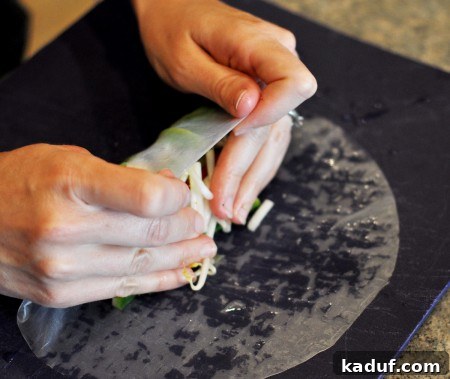
Continue to fold the wrapper upwards, rolling the ingredients into a compact cylinder. Maintain a consistent, gentle pressure to keep the roll tight and prevent the filling from shifting. This ensures a neat and aesthetically pleasing spring roll that holds its shape when cut and dipped.
Once you’ve rolled the wrapper up about halfway, it’s time to fold in the sides. Hold the middle section of the spring roll with your fingertips to stabilize it. Then, carefully fold in the left and right sides of the wrapper towards the center. This step is similar to how you would fold the sides of a burrito or a tightly wrapped gift, creating neat, enclosed ends for your spring roll.
With the sides now tucked in, continue rolling the wrapper all the way to the top edge. The goal is to create a firm, cylindrical roll. The inherent stickiness of the wet rice paper will help the layers adhere to each other, ensuring a securely wrapped spring roll. Don’t hesitate to use a light, even pressure throughout this final rolling motion.
Once you reach the top, the natural stickiness of the rice paper will seal the roll shut. Gently press the seam to ensure it’s fully closed. Place the finished spring roll seam-side down on a serving platter or cutting board. Repeat the entire process for the remaining ingredients. For the best experience, serve your freshly made Vietnamese spring rolls immediately to enjoy their optimal texture and flavor. If preparing slightly in advance, cover them with a damp cloth to prevent drying.
Tips for Perfect Spring Rolls Every Time
- Don’t Over-Soak the Wrappers: A quick dip is all you need. Over-soaked wrappers become too sticky and tear easily. They continue to soften as you fill and roll.
- Prep All Ingredients First: Have all your chopped vegetables, cooked meat, and sauce ready before you start rolling. This makes the assembly process smooth and efficient.
- Don’t Overfill: While tempting to stuff them, overfilling can make rolls difficult to seal and prone to tearing. Aim for a manageable amount.
- Keep Rolls Moist: If you’re not serving immediately, cover finished rolls with a damp paper towel or plastic wrap to prevent the wrappers from drying out and hardening.
- Serving Suggestion: For a delightful presentation and easier eating, cut larger rolls in half diagonally before serving.
Frequently Asked Questions (FAQs) About Vietnamese Spring Rolls
- What kind of wrappers should I use for spring rolls?
- You’ll need rice paper wrappers, often labeled as “Bánh Tráng” in Asian markets. They come in various sizes (8.5-inch or 10-inch are common) and are typically made from rice flour, water, and sometimes tapioca starch. Ensure they are thin and translucent.
- Can I make spring rolls ahead of time?
- While best enjoyed fresh, you can prepare spring rolls up to a few hours in advance. Store them on a platter, spaced apart, covered with damp paper towels and then plastic wrap, and refrigerate. They may lose a bit of their crispness but will still be delicious. They are not suitable for freezing.
- What if I don’t eat meat? Can I make vegetarian or vegan spring rolls?
- Absolutely! Spring rolls are incredibly adaptable. For a vegetarian version, omit the chicken and use marinated tofu or tempeh, or simply load up on extra vegetables and rice vermicelli noodles. For vegan, ensure all sauces (like fish sauce) are replaced with vegan alternatives (e.g., soy sauce or tamari, mushroom-based “fish” sauce).
- What other proteins can I use?
- Shrimp is a very popular choice for spring rolls, often lightly poached or grilled. You can also use thinly sliced pork, beef, or even shredded duck. The key is to ensure the protein is cooked and sliced thinly for easy rolling.