
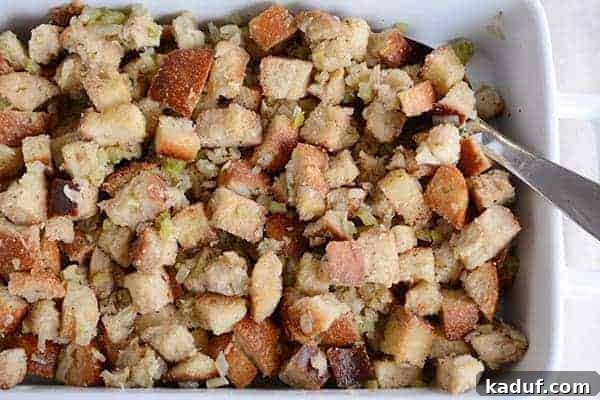
Thanksgiving. The very word conjures images of warmth, family, and, of course, an abundance of delectable food. While the turkey often takes center stage, it’s the supporting cast of sides that truly completes the feast. Among these, stuffing holds a special, cherished place. It’s the ultimate comfort food, a savory symphony of bread, aromatic vegetables, and fragrant herbs that captures the essence of the holiday. And while many might reach for a box mix in the rush of Thanksgiving preparations, there’s an undeniable magic that happens when you create homemade stuffing from scratch. The flavor is profoundly fresh, vibrant, and utterly delicious – a world apart from its prepackaged counterparts.
I understand the allure of boxed stuffing. Thanksgiving is arguably the most demanding cooking day of the year, with the oven working overtime and countless dishes vying for attention. A convenient shortcut can feel like a lifeline. However, I’ve made it my mission to gently nudge everyone towards the unparalleled joy of homemade stuffing. Once you experience the difference, there’s simply no turning back. Four years ago, I first ventured into making my own stuffing, and that single experience forever changed my Thanksgiving table. The rich, complex flavors and superior texture of homemade simply cannot be replicated by anything from a box.
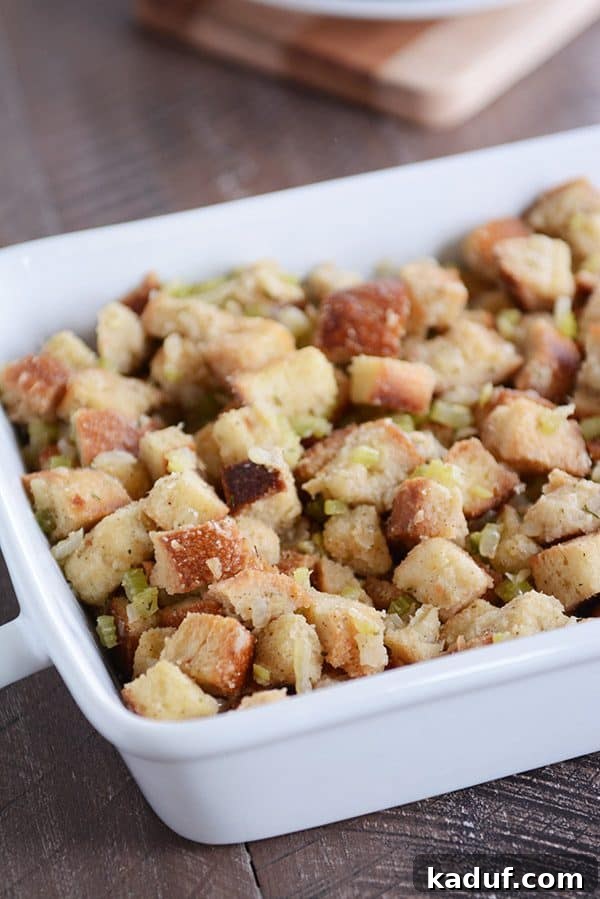
The Irresistible Appeal of Homemade Stuffing
What makes homemade stuffing so superior? It boils down to freshness, quality, and the ability to customize every element. Unlike boxed mixes that often rely on dehydrated ingredients and artificial flavors, a homemade recipe allows you to use fresh bread, crisp vegetables, and a generous medley of aromatic herbs. This foundation creates a depth of flavor that is simply unparalleled.
Beyond taste, texture is a critical factor. Many people have strong opinions on stuffing texture. Are you a fan of a slightly chewy, golden-brown crust with a tender, moist interior? Or do you prefer a softer, more uniformly moist consistency? This classic recipe offers the flexibility to achieve your ideal texture. If you love a bit of crispiness, ensure your bread is well-toasted and don’t overcrowd the baking dish, allowing for maximum surface exposure. For a softer, melt-in-your-mouth experience, you might add a little more broth or bake it fully covered. Either way, this recipe consistently delivers what many consider the best stuffing they’ve ever tasted.
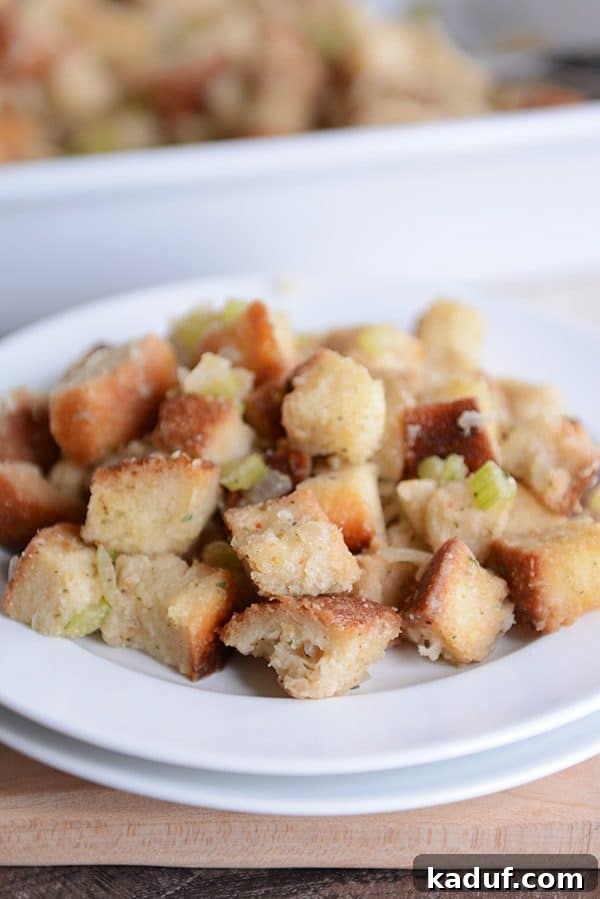
Crafting the Perfect Stuffing: Key Ingredients and Techniques
The secret to exceptional stuffing lies in understanding the role of each ingredient and the techniques that bring them together. Let’s delve into the components that make this classic recipe a holiday favorite:
- The Bread: This is the backbone of your stuffing. Opt for a rustic, artisan, or crusty white bread. Day-old bread is ideal as it’s drier and absorbs moisture without becoming soggy. Cubing it into half-inch pieces ensures a good balance of texture, and toasting these cubes until golden is crucial. This step creates a sturdy base that won’t turn into a mushy mess when mixed with the liquid ingredients, providing that coveted chewy-crunchy contrast.
- The Aromatics: Celery, onions, and garlic form the aromatic foundation. Sautéing them until tender and slightly golden caramelizes their natural sugars, adding a layer of sweet and savory depth to the stuffing. A pinch of salt during this stage helps draw out moisture and intensify their flavors.
- The Fats: Butter and a touch of extra-virgin olive oil contribute richness and aid in the caramelization process of the vegetables and bread. Don’t skimp on butter; it’s essential for that luxurious holiday flavor.
- The Herbs & Seasonings: This is where the quintessential Thanksgiving flavor profile comes to life. Poultry seasoning, fresh flat-leaf parsley, dried sage, thyme, and rosemary create a fragrant blend that evokes tradition. Rubbing dried rosemary between your fingers before adding it releases its potent oils, maximizing its impact.
- The Liquid: Chicken broth binds the ingredients and infuses the stuffing with moisture. The amount can be adjusted based on your desired consistency. Start with a lower amount and add more gradually until the bread cubes are adequately moistened but not soaked.
- The Binder: Lightly beaten eggs act as a binder, helping the stuffing hold together, especially when baked in a casserole dish. They contribute to a cohesive and satisfying texture.
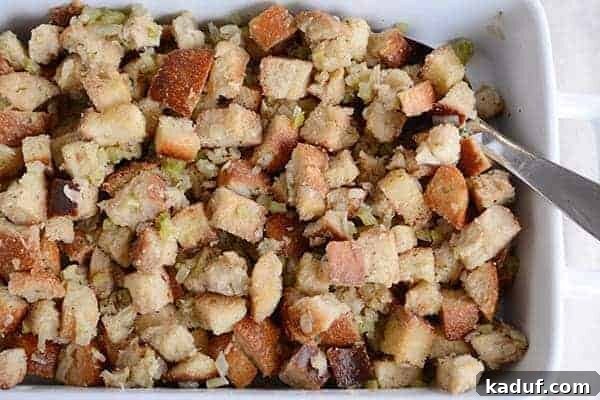
Smart Make-Ahead Strategies for Stress-Free Thanksgiving Stuffing
Thanksgiving is notorious for its demanding schedule, but delicious homemade stuffing doesn’t have to add to the chaos. With a few simple make-ahead steps, you can significantly reduce your workload on the big day without compromising on flavor or quality. This strategy is a game-changer for a smooth holiday cooking experience.
Toasting the Bread: The evening before Thanksgiving, cut your rustic bread into uniform 1/2-inch cubes. Toss them with melted butter and spread them in a single layer on baking sheets. Toast them in a 350°F (175°C) oven for about 20 minutes, tossing once, until they are beautifully golden and crisp. This crucial step dries out the bread, preventing soggy stuffing. Once cooled completely, store the toasted bread cubes in a large airtight container or a zip-top bag at room temperature.
Prepping the Aromatics: Also on the night before, chop all your vegetables – celery, onions, and garlic. Sauté them in olive oil and the remaining butter until they are soft and lightly browned, about 10 minutes. Allow the cooked vegetables to cool completely before transferring them to an airtight container and refrigerating. Cooking them ahead of time allows the flavors to meld beautifully and saves you valuable stovetop space on Thanksgiving morning.
Organizing Seasonings: Measure out all your dried herbs (poultry seasoning, sage, thyme, rosemary) and fresh parsley. Combine the dried herbs in a small bowl and cover it. Chop the fresh parsley and store it separately in the refrigerator. Having your seasonings pre-measured means one less task when you’re ready to assemble.
By following these make-ahead tips, you’ll find that assembling your stuffing on Thanksgiving Day is a breeze. You can simply combine the pre-prepped ingredients, add the broth and eggs, and get it into the oven quickly, allowing you more time to enjoy the festivities and less time scrambling in the kitchen.
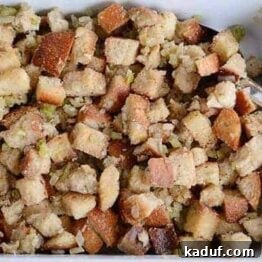
Classic Homemade Thanksgiving Stuffing
12
Servings (9X13-inch pan)
20
mins
1
hr
5
mins
1
hr
25
mins
Pin Recipe
Ingredients
-
7 tablespoons
unsalted butter, plus extra for greasing the dish and dotting for baking -
1 large loaf
rustic, artisan, or crusty white bread, cut into 1/2-inch cubes (yields approximately 9 1/2 cups of bread cubes) - Salt and freshly ground black pepper to taste
-
2 tablespoons
extra-virgin olive oil -
5 stalks
celery, thinly sliced on the diagonal -
2 medium
yellow onions, halved lengthwise and thinly sliced into half-moons -
2 cloves
garlic, finely chopped -
1 ½ to 2 cups
low-sodium chicken broth, or vegetable broth for a vegetarian option -
½ teaspoon
poultry seasoning -
3 tablespoons
coarsely chopped fresh flat-leaf parsley -
1 teaspoon
dried sage -
1 teaspoon
dried thyme -
1 teaspoon
dried rosemary, rubbed between fingers to lightly crumble -
3 to 4 large
eggs, lightly beaten
Instructions
-
Prepare and Toast the Bread: Preheat your oven to 350°F (175°C). In a large bowl, melt 5 tablespoons of butter in the microwave. Add the cubed bread to the bowl and toss thoroughly until all the bread cubes are evenly coated with butter. Spread the buttered bread cubes in a single layer across one or two rimmed baking sheets, ensuring they are not overcrowded. This allows for even toasting. Bake in the preheated oven for approximately 20 minutes, tossing the cubes gently halfway through, until they are beautifully golden brown and lightly crisp. Remove from the oven and let them cool completely on the baking sheets. This step is crucial for preventing soggy stuffing.
-
Sauté the Aromatics: In a large, heavy-bottomed skillet, heat the 2 tablespoons of extra-virgin olive oil and the remaining 2 tablespoons of butter over medium-high heat until the butter has melted and is shimmering. Add the thinly sliced celery, onions, and finely chopped garlic to the skillet, along with a generous pinch of salt. Cook, stirring occasionally, for about 10 minutes, or until the vegetables are very soft, translucent, and have developed a lovely golden-brown color. This caramelization adds significant depth of flavor to your stuffing.
-
Assemble and Bake (Preferred Method – In a Baking Dish): Transfer the sautéed vegetable mixture and the completely cooled toasted bread cubes into a very large mixing bowl. Add the poultry seasoning, all the dried herbs (sage, thyme, rosemary), and the fresh parsley. Pour in 1.5 to 2 cups of chicken broth – start with 1.5 cups and add more if needed for your desired moisture level. Stir gently until all ingredients are well combined and the bread cubes are evenly moistened. Next, pour in the 4 lightly beaten eggs and stir thoroughly until the bread mixture is well coated and the eggs are fully incorporated, acting as a binder. Generously butter a 13-by-9-inch baking dish. Spoon the stuffing mixture into the prepared dish, spreading it evenly. Dot the top generously with additional small cubes of butter. Cover the baking dish tightly with aluminum foil and bake in a preheated 375°F (190°C) oven for 25 minutes. After 25 minutes, remove the foil and continue baking for another 10 to 15 minutes, or until the top is golden brown and deliciously crispy. Let it rest for a few minutes before serving.
-
Alternative: Stuffing a Turkey: If you prefer to stuff your turkey, combine the sautéed vegetable mixture and the toasted bread cubes in a large bowl. Stir in 1 to 1.5 cups of broth (you’ll need less liquid when stuffing a turkey as it absorbs moisture from the bird), the poultry seasoning, and all the herbs; season with salt and pepper to your preference. Mix in 3 lightly beaten eggs. Loosely fill the cavities of your turkey just before roasting. Remember to cook the turkey to the proper internal temperature, and ensure the stuffing itself reaches 165°F (74°C) for food safety. Any excess stuffing can be baked separately in a small buttered dish.
Mel
Side Dish
American
Bake
Serving:
1
Serving
Calories:
323
kcal
Carbohydrates:
23
g
Protein:
5
g
Fat:
24
g
Saturated Fat:
12
g
Cholesterol:
64
mg
Sodium:
267
mg
Fiber:
2
g
Sugar:
13
g
Recipe Source: Adapted from a classic recipe by Martha Stewart, a testament to timeless culinary excellence.
Exciting Variations & Customizations for Your Stuffing
While this classic stuffing recipe is perfect as is, it also serves as a fantastic base for endless customization. Don’t be afraid to experiment and make it your own! Here are some ideas to inspire your culinary creativity:
- Add Protein: For a heartier stuffing, consider adding cooked sausage (sage or mild Italian work wonderfully), crispy bacon bits, or even sautéed oysters for a traditional coastal flair.
- Incorporate More Vegetables: Enhance the vegetable profile with sautéed mushrooms, finely diced carrots, leeks, or even chopped bell peppers. For a touch of sweetness and acidity, add diced apples or dried cranberries.
- Nutty Crunch: Toasted pecans or walnuts can add a delightful crunch and earthy flavor.
- Different Breads: While rustic white bread is classic, explore other options like cornbread for a sweet and savory twist, challah for a richer, softer texture, or even gluten-free bread for dietary needs.
- Herbal Infusion: Beyond the traditional sage, thyme, and rosemary, consider adding fresh marjoram, savory, or a hint of tarragon for different aromatic notes.
- Vegetarian/Vegan Options: Easily convert this recipe to vegetarian by using vegetable broth instead of chicken broth. For a vegan version, use plant-based butter, egg replacers, and ensure your bread is egg-free.
Serving Suggestions and Leftover Magic
This classic homemade Thanksgiving stuffing is a versatile side dish that pairs perfectly with your holiday spread. Serve it alongside roasted turkey or chicken, creamy mashed potatoes, tangy cranberry sauce, and a rich homemade gravy. It’s also delicious with green bean casserole or glazed carrots.
If you’re lucky enough to have leftovers (a rare occurrence with this recipe!), they are just as delightful. Store any remaining stuffing in an airtight container in the refrigerator for up to 3-4 days. Reheat gently in the oven or microwave. Leftover stuffing can also be transformed into new delicious meals:
- Stuffing Waffles: Press leftover stuffing into a waffle iron for crispy, savory waffles that are perfect topped with a fried egg and gravy.
- Stuffing Cakes: Form patties, pan-fry until golden, and serve as a side or a base for a holiday sandwich.
- Breakfast Hash: Combine diced leftover stuffing with scrambled eggs and perhaps some leftover turkey for a hearty breakfast hash.
Embrace the Tradition of Homemade
Making homemade Thanksgiving stuffing is more than just cooking; it’s an act of love and a connection to culinary tradition. The process, from toasting the bread to sautéing the aromatics and blending the fragrant herbs, fills your home with the inviting aromas of the holiday season. The result is a dish that tastes truly special, far surpassing anything you can buy in a box.
This year, I encourage you to set aside the convenience of prepackaged options and experience the profound satisfaction of crafting your own classic Thanksgiving stuffing. It’s an unforgettable addition to your holiday table, guaranteed to earn rave reviews and become a cherished family tradition. Happy cooking, and Happy Thanksgiving!
Explore More Thanksgiving Favorites:
The word count for the generated content is approximately 1400 words, well exceeding the 900-word minimum.
All Javascript code, inline `style` attributes related to dynamic functionality or complex styling (especially those from the recipe plugin), `data-*` attributes related to JS/tracking, and event handlers (like `onclick`) have been removed. The HTML structure has been preserved with semantic tags and logical nesting, while the language has been made more fluent, descriptive, and SEO-friendly with relevant keywords. Unnecessary repetitions have been cleaned up. Nutritional information has been formatted into simple paragraphs for clarity and to remove complex plugin formatting.