
Mastering the Chiffonade: How to Effortlessly Cut Basil into Perfect Strips
Fresh basil is a beloved herb, renowned for its aromatic, peppery-sweet flavor that brings an undeniable vibrancy to countless dishes. From the simplicity of a garden salad to the complexity of a gourmet pasta, its fragrant leaves are a culinary essential. But have you ever admired those delicate, uniform ribbons of basil gracefully adorning a dish in a restaurant, and wondered how such precision is achieved? The secret lies in a classic French culinary technique known as chiffonade. Pronounced either “shif-oh-nod” or “shif-oh-nade” (rhyming with “lemonade”), this elegant method transforms whole basil leaves into beautiful, consistent strands, significantly enhancing both the visual appeal and the overall sensory experience of your cooking.
While the term “chiffonade” might evoke images of a professional chef’s intricate knife work, the technique for basil is surprisingly straightforward and incredibly rewarding to master. It’s a fundamental kitchen skill that not only makes your meals look more sophisticated but also vastly improves how the basil integrates with other ingredients. Unlike haphazardly tearing or roughly chopping basil, which often leads to bruised, darkened leaves and diminished flavor, the chiffonade method is designed to preserve the herb’s delicate integrity. Each finely cut strip releases its full, fresh aroma gently, ensuring a balanced flavor profile without overwhelming your palate. Whether you’re an experienced cook or just starting your culinary journey, learning to chiffonade basil will quickly become one of your most valuable and satisfying kitchen tricks.
Why Master the Chiffonade Technique for Basil?
You might be asking, “Is it really worth the extra effort? Can’t I just chop or tear my basil?” While tearing basil is perfectly acceptable for rustic presentations and effective at preventing bruising, and a quick chop can suffice in a hurry, chiffonading offers a multitude of distinct advantages that genuinely elevate your culinary creations:
- Preserves Freshness and Prevents Bruising: Basil leaves are exceptionally delicate. Aggressive chopping ruptures their cell walls, leading to rapid oxidation, a disheartening discoloration (often turning black), and a bitter, unpleasant taste. This is why roughly chopped basil frequently appears bruised and unappetizing. The chiffonade technique involves making clean, precise slices through rolled leaves with a sharp knife, minimizing cellular damage. This process effectively preserves basil’s vibrant green hue and its naturally sweet, fresh aroma.
- Enhances Presentation: There’s an undeniable allure to uniformly cut herbs. The delicate, ribbon-like basil strips instantly add a touch of elegance and professionalism to any dish, making it look as exquisite as it tastes. This refined finish is particularly striking when garnishing vibrant salads, gourmet pizzas, sophisticated pasta dishes, and comforting soups.
- Ensures Even Flavor Distribution: Thin, consistently sized strips of basil disperse far more uniformly throughout a dish compared to larger, irregularly shaped pieces. This meticulous distribution ensures that every single bite delivers a balanced and subtle hint of basil’s distinctive flavor, rather than an occasional, overpowering burst. The smaller surface area also allows the basil to blend seamlessly into the dish, complementing rather than dominating other ingredients.
- Maximizes Aroma and Texture: By finely slicing the basil, you increase its exposed surface area, allowing the aromatic oils to be released gently and gradually. This results in a more fragrant and nuanced aromatic experience without the unwanted chewiness that can sometimes accompany larger basil pieces. The delicate texture of chiffonaded basil practically melts into your dish, providing a subtle aromatic lift rather than a distinct fibrous element.
- Optimizes Efficiency for Volume: When a recipe calls for a substantial amount of basil, the technique of stacking and rolling multiple leaves to chiffonade them is dramatically more efficient than individually chopping or tearing each leaf. This method saves significant time and effort, making it ideal for preparing larger quantities for family meals or entertaining guests.
The Art of the Chiffonade: A Detailed Step-by-Step Guide
Ready to transform your basil into beautiful ribbons? Follow these clear and concise steps to achieve delicate, perfect strips every time, channeling your inner chef with confidence.
Step 1: Gather and Prepare Your Basil Leaves
The foundation of a great chiffonade starts with choosing and preparing the freshest basil available.
- Select Fresh Basil: Always begin with vibrant green basil leaves, free from any wilting, dark spots, or blemishes. The fresher the basil, the easier and more satisfying the chiffonade will be.
- Gentle Washing: Rinse the basil leaves carefully under cool running water. Handle them with extreme gentleness to avoid tearing or bruising their delicate structure.
- Thorough Drying is Critical: This is arguably the most crucial preparatory step. Any residual moisture on the basil leaves will cause them to stick together, making clean, precise cuts nearly impossible and increasing the likelihood of bruising. Use a salad spinner to remove excess water, then gently pat the leaves completely dry with paper towels. Ensure they are bone dry before proceeding.
- Remove Stems: Carefully pluck the individual leaves from their stems. For exceptionally large basil leaves, you might opt to trim any thick central veins if they feel particularly fibrous, although this is generally not necessary for most common basil varieties.
Step 2: Stack and Roll the Leaves
This innovative stacking and rolling method is the genius behind the chiffonade technique.
- Neat Stacking: Lay the thoroughly dried basil leaves flat on your clean cutting board. Carefully stack them one on top of the other, aligning their edges as evenly as possible. To ensure ease of slicing and uniform results, keep your stack relatively small – typically 5 to 10 leaves work best, depending on their size. An overly thick stack can be challenging to roll tightly and slice cleanly.
- Tight Rolling: Starting from one end (often the stem end, as it tends to be wider and easier to begin rolling), gently but firmly roll the stacked basil leaves into a tight, compact, cigar-like cylinder. The tighter and more uniform your roll, the more delicate and consistent your resulting strips will be. Ensure there are no loose spots or gaps within the roll.
Step 3: Slice with Precision
With your basil rolled, it’s time for the cutting – precision and technique are paramount here.
- Secure the Roll: Place the rolled basil cylinder flat on your cutting board. Use your non-dominant hand to hold the roll firmly in place, curling your fingertips under in the “claw” grip to protect them from the knife blade.
- Utilize a Razor-Sharp Knife: This point cannot be overemphasized. A very sharp chef’s knife or santoku knife is absolutely essential for a successful chiffonade. A dull knife will not slice cleanly; instead, it will crush and tear the delicate basil leaves, negating all your careful preparation. Regularly sharpen and hone your knives.
- Execute Thin Slices: With your sharp knife, make very thin, perpendicular slices across the width of the rolled basil. Aim for cuts that are as consistent and fine as possible – ideally within the range of 1/16 to 1/8 inch wide. Use a smooth, fluid rocking motion with your knife, allowing the sharpness of the blade to do the work rather than applying excessive downward pressure. Continue slicing along the entire length of the roll until you have a beautiful pile of delicate, uniform strips.
Step 4: Gently Separate the Strips
Once sliced, the delicate basil strips will naturally cling together slightly.
- Fluff Gently: Carefully run your fingers through the pile of sliced basil ribbons to gently separate them into individual, airy strands. Exercise caution to avoid crushing the delicate strips you’ve just created.
- Serve Immediately: For optimal flavor, aroma, and visual appeal, chiffonaded basil is always best used right away. Its delicate nature means it begins to wilt and oxidize relatively quickly after being cut.
Tips for a Flawless Chiffonade Every Time
Even after understanding the basic steps, a few additional insights can help you perfect your chiffonade technique and consistently achieve beautiful results.
- The Unwavering Rule of a Sharp Knife: This is non-negotiable for any successful knife work, but particularly vital for chiffonading delicate herbs. A sharp blade ensures clean cuts, prevents bruising, and produces crisp, well-defined strips. Make knife sharpening a regular part of your kitchen routine.
- Absolutely Dry Basil: As previously highlighted, moisture is the arch-nemesis of a pristine chiffonade. Excess water will cause leaves to clump, making precise cuts impossible and inevitably leading to bruising and an inferior result.
- Avoid Over-Stacking: While it might seem tempting to stack a large quantity of basil to speed up the process, an overly thick roll becomes unwieldy and challenging to slice evenly. This often results in inconsistent strips. For best control and uniform results, stick to a modest stack of 5-10 leaves for most home cooking applications.
- Handle with Utmost Gentleness: Basil is inherently fragile. From the moment you wash it, through the rolling process, and finally when separating the strips, handle the leaves with extreme care to prevent any unnecessary bruising or damage.
- Cut Just Before Serving: Once cut, basil begins to oxidize and wilt relatively quickly, losing its vibrant color and fresh aroma. To preserve maximum freshness, flavor, and visual appeal, chiffonade your basil as close to the moment of serving as possible. If you absolutely must prepare it in advance, ensure the unrolled, dry leaves are wrapped loosely in a barely damp paper towel, stored in an airtight container, and refrigerated. Then, roll and slice just before it’s time to use them.
- Practice is Your Best Teacher: Don’t be discouraged if your initial attempts aren’t perfectly uniform. Like any fine motor skill in the kitchen, chiffonading improves significantly with consistent practice. The more you engage with the technique, the more confident, precise, and efficient your cuts will become.
Beyond Basil: Adapting the Chiffonade Technique to Other Ingredients
While basil is arguably the most common and celebrated herb for the chiffonade, this versatile slicing technique is not limited to just one ingredient. It can be skillfully applied to various other leafy greens and herbs, transforming them into elegant, fine strips that enhance both texture and appearance. Think of any flat, delicate leaf that could benefit from this refined presentation.
- Mint: Perfect for garnishing desserts, cocktails, Middle Eastern cuisine, or fresh fruit salads, adding a burst of cool, refreshing flavor.
- Spinach: Chiffonaded spinach is excellent for integrating into fresh salads, light stir-fries, or as a delicate bed for grilled proteins, offering a tender texture.
- Sage: Fine ribbons of sage are wonderful when infused into brown butter sauces for pasta, gnocchi, or roasted poultry, releasing its earthy aroma.
- Lettuce (e.g., Romaine, Butter Lettuce): Chiffonading crisp lettuce varieties creates a beautiful, finely textured base for elaborate salads or adds a pleasant crunch to sandwich fillings.
- Sorrel: Known for its distinctive tart, lemony flavor, sorrel’s unique taste is beautifully showcased when sliced into delicate ribbons for soups or sauces.
- Kale (tender varieties like Lacinato/Dinosaur Kale): For more delicate kale salads, a chiffonade can dramatically soften and transform the texture, making it far more palatable and elegant.
- Swiss Chard: Removing the thick stems and chiffonading the leaves allows them to cook quickly and uniformly in sautés or as part of a stuffing.
The core principle remains consistent: stack the clean, dry leaves, roll them tightly, and slice them thinly with a sharp knife. Experimenting with different herbs and leafy greens will unveil new culinary possibilities and add a sophisticated touch to your everyday cooking.
Creative Culinary Uses for Your Chiffonaded Basil
Once you’ve mastered the elegant art of the chiffonade, an exciting world of culinary possibilities opens up. These delicate basil strips are far more than just a garnish; they integrate beautifully and purposefully into a wide array of dishes, elevating both flavor and aesthetic.
- Classic Caprese Creations: Chiffonaded basil is the quintessential, inseparable partner for fresh tomatoes and creamy mozzarella. Whether in a traditional Caprese salad, layered into a gourmet sandwich, or skewered for an appetizer, the basil ribbons provide the perfect aromatic and visual counterpoint.
- Pasta Perfection: Stir a generous handful of chiffonaded basil into any warm pasta dish just before serving. It instantly brightens up rich tomato sauces, homemade pesto, or simple olive oil-based pastas. The thin, delicate strips cling perfectly to the noodles, ensuring a burst of fresh flavor in every forkful.
- Pizzas and Flatbreads: Sprinkle fresh basil ribbons generously over your pizza or flatbread immediately after it emerges from the hot oven. The residual heat will gently wilt the basil, releasing its intoxicating aroma without overcooking, preserving its fresh taste.
- Soup and Stew Enhancements: Add a vibrant sprinkle of chiffonaded basil to individual bowls of soup or stew right before serving. It provides a refreshing burst of flavor and a beautiful green garnish, especially lovely in tomato-based soups, minestrone, or even a classic gazpacho.
- Salad Sensations: Elevate virtually any green salad, hearty grain salad, or even a refreshing fruit salad with the addition of chiffonaded basil. It pairs exceptionally well with berries, stone fruits, citrus, and various cheeses, adding an unexpected layer of freshness.
- Omelets and Scrambles: Fold delicate basil strips into your eggs just before they finish cooking for a fragrant, visually appealing, and unexpectedly gourmet breakfast or brunch.
- Sandwiches and Wraps: Layer chiffonaded basil into your everyday sandwiches, wraps, or toasted paninis for an extra dimension of fresh flavor, aromatic lift, and appealing texture.
- Infused Oils and Vinegars: Gently stir finely chiffonaded basil into high-quality olive oil or white wine vinegar to create exquisite homemade infused condiments, perfect for drizzling or dressing.
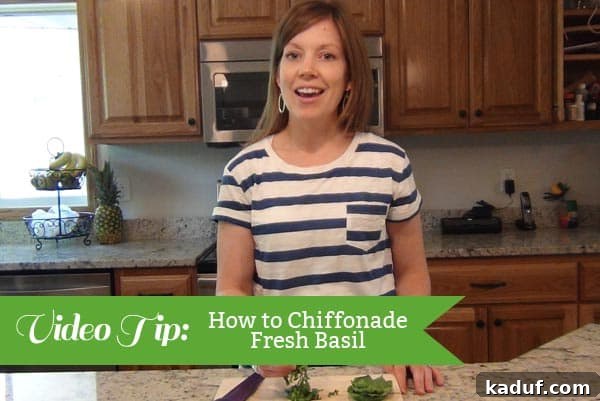
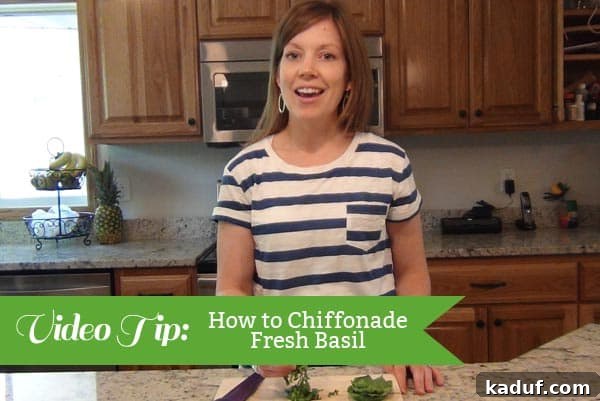
To truly internalize this beautiful technique and perfect your form, we highly recommend taking a moment to watch the accompanying video. It serves as an excellent visual guide, reinforcing everything you’ve learned through text and demonstrating the fluid motion that will have you chiffonading like a seasoned professional in no time!
Inspired Dishes Featuring Fresh Basil: Put Your Skills to Use!
Now that you’ve mastered the elegant chiffonade technique, it’s the perfect time to unleash your new skill and put it to delicious use in the kitchen! Here is a curated selection of my all-time favorite recipes that truly shine and reach their full potential with the addition of fresh, perfectly chiffonaded basil. Each of these dishes benefits immensely from the vibrant flavor, aromatic depth, and refined presentation that only delicately cut basil can provide.
- Summer Couscous Salad: A wonderfully light and refreshing salad where delicate basil ribbons intermingle beautifully with fluffy couscous, garden-fresh vegetables, and a zesty dressing.
- Marinated Caprese Salad: The iconic Italian trio of fresh mozzarella, ripe tomatoes, and a tangy marinade, flawlessly enhanced and garnished with bright, aromatic chiffonaded basil.
- Fast and Fresh Orzo Salad: A quick-to-prepare and incredibly flavorful pasta salad, vibrantly elevated by the aromatic presence of thinly sliced basil, juicy tomatoes, and salty feta.
- Grilled Caprese Chicken: A delightful and wholesome main course that marries the beloved Caprese flavors with tender, perfectly grilled chicken breasts, culminating with a generous topping of fresh basil.
- Summer Corn Salad: Sweet, succulent corn and other seasonal summer favorites are given an aromatic and colorful lift with a generous sprinkle of chiffonaded basil, perfect for picnics.
- Cherry Tomato Caprese Salad: A charming, bite-sized rendition of the classic Caprese, where small basil strips integrate seamlessly with sweet cherry tomatoes and mini mozzarella balls.
- Fusilli alla Caprese: A hearty and satisfying pasta dish where the spiral fusilli noodles expertly capture the fresh basil ribbons, diced tomatoes, and creamy mozzarella in every twist and turn.
- Tri Color Pasta Salad: A visually appealing and incredibly satisfying pasta salad that receives an extra layer of freshness, aroma, and vibrant color from finely cut basil, making it a crowd-pleaser.
Mastering the chiffonade technique is truly more than just acquiring a fancy knife skill; it’s about unlocking the full potential of fresh basil, enriching your dishes with both exquisite flavor and elegant presentation. So, gather a fresh bunch of basil, ensure your knife is impeccably sharp, and prepare to impress your taste buds and delight your guests with your newfound culinary finesse!
For even more invaluable cooking video tips, including this comprehensive chiffonade tutorial and many others, I invite you to explore my dedicated Video Tips page. And for a continuous stream of culinary inspiration and visual guides designed to make cooking enjoyable and accessible, don’t forget to subscribe to Mel’s Kitchen Cafe YouTube channel. Happy cooking and creative culinary adventures!