
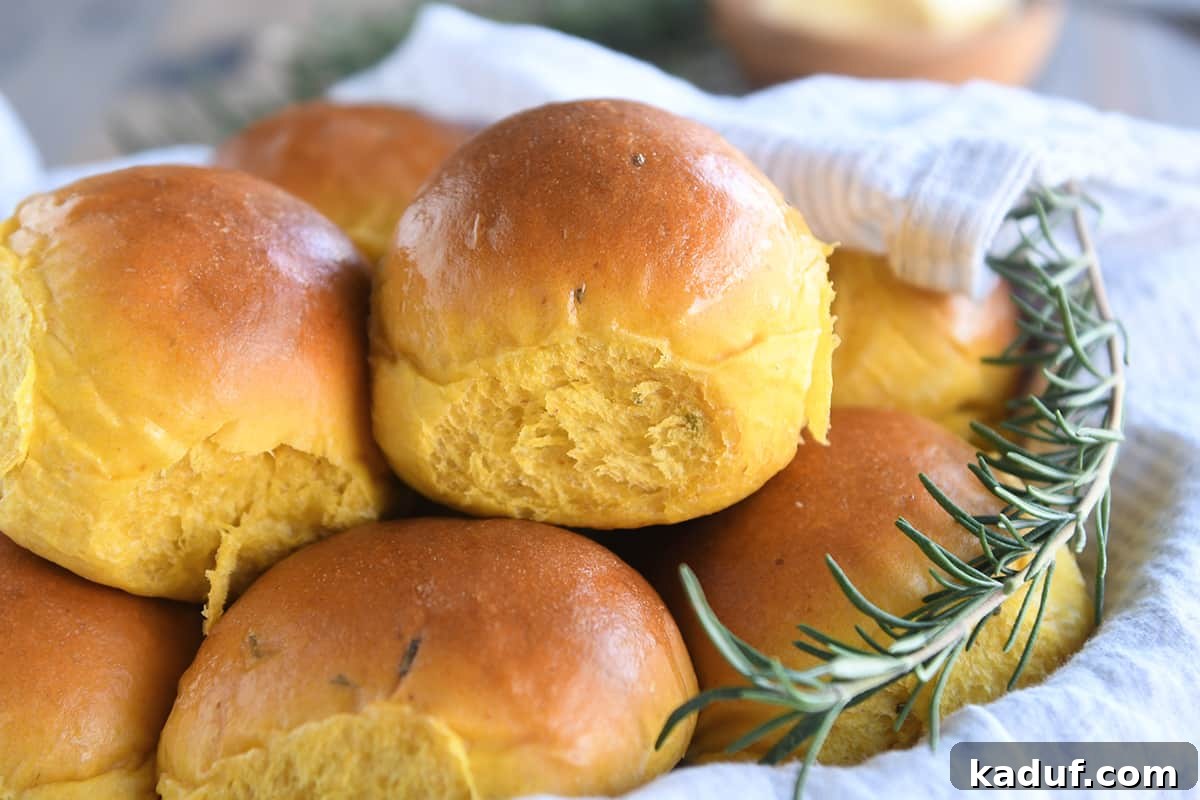
Fluffy Pumpkin Rosemary Dinner Rolls: Your Ultimate Guide to Irresistible Homemade Bread
Discover the secret to incredibly soft, flavorful, and aromatic dinner rolls that will elevate any meal. These fluffy pumpkin rosemary dinner rolls are a game-changer, blending subtle sweetness with fragrant herbs for an unparalleled baking experience.
In a world overflowing with bread recipes, it might seem audacious to introduce yet another. However, these fluffy pumpkin rosemary dinner rolls are not just “another recipe” – they are a revelation. With a single bite, you’ll understand why this recipe stands out, transforming skeptics into fervent believers in the magic of homemade bread.
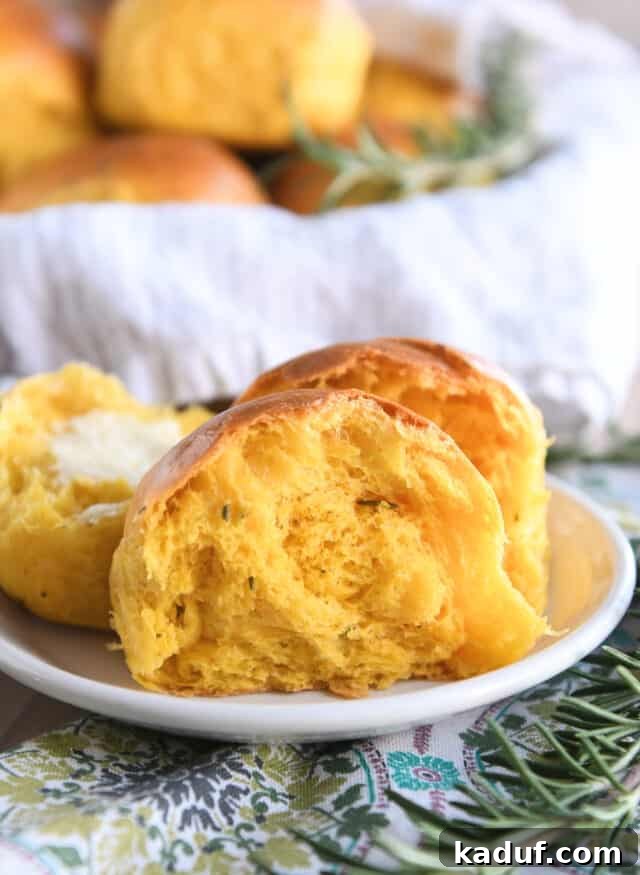
What makes these rolls so extraordinary? It’s the harmonious marriage of two star ingredients: pumpkin and fresh rosemary. While the pumpkin flavor itself is remarkably subtle – so much so that even the pickiest eaters might not detect it – its contribution to the rolls is profound. It imparts a captivating, warm hue and, more importantly, a magically soft and tender texture that is simply unparalleled. Paired with the aromatic depth of fresh rosemary, these rolls transcend the ordinary, offering a sophisticated flavor profile that is both comforting and exciting.
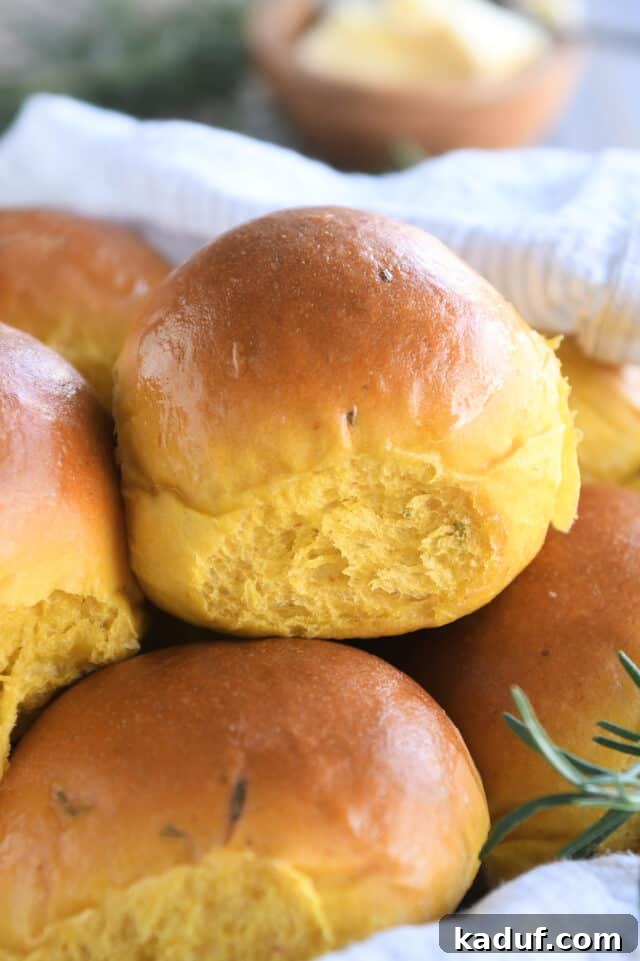
The Dynamic Duo: Pumpkin & Rosemary in Your Dinner Rolls
The unique character of these dinner rolls comes from the thoughtful inclusion of pumpkin and rosemary. Each ingredient plays a vital role, contributing to both the sensory appeal and the structural integrity of the final product.
The Magic of Pumpkin Puree
For the pumpkin, you have the flexibility to choose between readily available canned pumpkin puree or a homemade variety. Both options work beautifully, but there’s a small consideration to keep in mind if you opt for homemade. Homemade pumpkin puree can sometimes contain more moisture than its store-bought counterpart. If using homemade, it’s advisable to drain off as much excess liquid as possible. You might also find yourself needing to incorporate a touch more flour than the recipe initially specifies, which is perfectly acceptable and common in yeast baking. The pumpkin, even if not overtly tasted, is the secret behind the rolls’ tender crumb and that inviting, autumnal glow.
The Aromatic Allure of Rosemary
For the rosemary, fresh is always best. If you can source fresh rosemary, it will make a world of difference in the fragrance and vibrant flavor it lends to these rolls. Fresh rosemary is typically easy to find in most grocery stores and its piney, slightly peppery notes perfectly complement the subtle sweetness of the pumpkin. However, if fresh rosemary isn’t available or if you prefer a simpler roll, you can certainly omit it. The rolls will still be wonderfully delicious, offering a pure pumpkin flavor that is equally delightful. While dried rosemary can be used in a pinch, be aware that its flavor will be less prominent and nuanced compared to its fresh counterpart.
Mastering the Basic Yeast Roll Dough with a Pumpkin Twist
At its heart, this recipe utilizes a fairly standard yeast roll dough, albeit with the exciting additions of pumpkin and rosemary. For anyone new to baking with yeast, or even seasoned bakers, understanding the nuances of yeast dough is key to success. Don’t be intimidated; the process is quite forgiving.
The Art of Flour Measurement
A common concern in yeast baking is the precise amount of flour. It’s crucial to remember that the exact quantity of flour needed can fluctuate based on several environmental and procedural factors. Variables such as your elevation, the ambient humidity, and even how you measure your flour (scooping vs. spooning and leveling) can all influence the dough’s consistency. This means the flour amount provided in the recipe is a guideline, not an absolute rule.
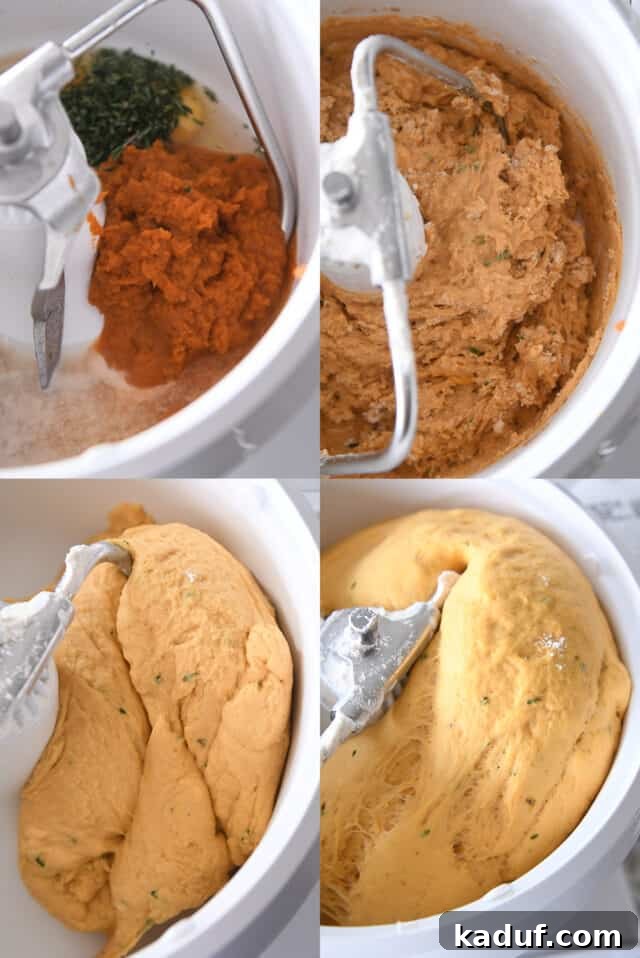
The ultimate gauge for flour amount is the look and feel of the dough itself. It should be wonderfully soft and possess a slight tackiness when touched. Importantly, it should still be able to form a cohesive ball and pull cleanly away from the sides of your mixing bowl. Trust your instincts and adjust flour gradually until you achieve this ideal texture.
The Patient Art of Rising: Nurturing Your Dough to Perfection
One of the most rewarding aspects of baking with yeast is witnessing the dough come to life during the rising process. Patience is a virtue here, and it pays off handsomely in the final texture of your rolls.
First Rise: Relaxation and Expansion
For the first rise, simplicity often reigns supreme. Many bakers, including myself, find it convenient to let the dough rise directly in the mixing bowl, simply covering it to prevent a dry crust from forming. If you prefer, or if your mixing bowl is not suitable, you can transfer the dough to a lightly greased separate bowl before covering it. Either method will yield excellent results. During this stage, the yeast works its magic, converting sugars into carbon dioxide and alcohol, causing the dough to double in size and develop its complex flavors.
Thanks to the unique properties of pumpkin in the recipe:
- This dough will exhibit a slightly slower rise compared to some other yeast dough formulations. This slower fermentation allows for deeper flavor development, so resist the urge to rush it.
- You’ll be delighted by the exceptionally silky smooth texture of this dough. It’s incredibly pliable and a joy to work with – almost like playing with modeling clay, but with the delicious promise of freshly baked bread!
Second Rise: Shaping and Final Proof
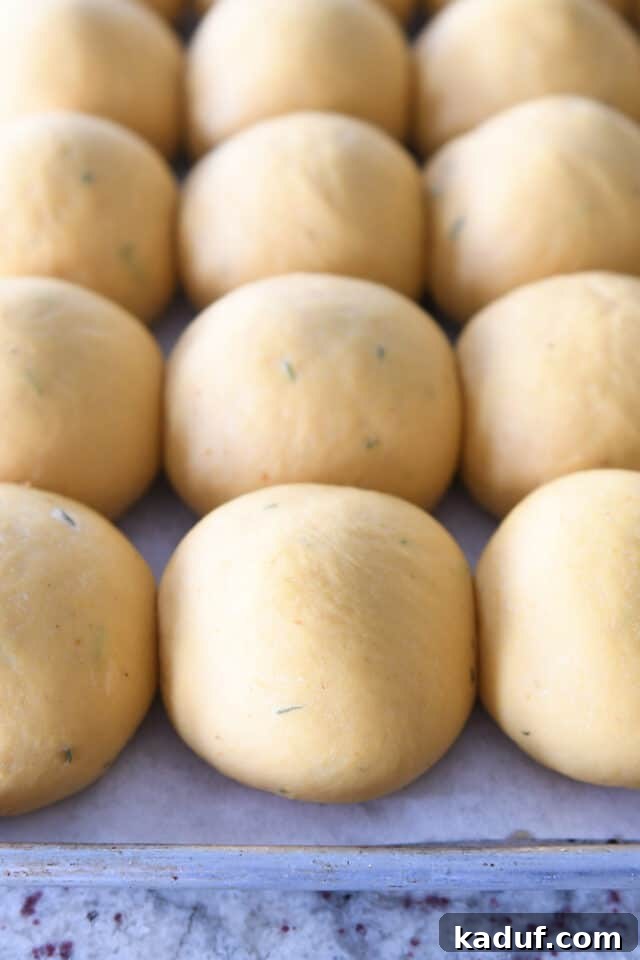
Once your dough has gracefully doubled in bulk, it’s time for shaping. Gently deflate the dough to release the accumulated gases, then divide it into approximately 20 equal pieces. The goal is uniformity, which ensures even baking. Roll each piece into a neat, round sphere. Arrange these charming little dough balls on a baking sheet lined with parchment paper, leaving about half an inch between each roll to allow for expansion. Cover them once more and let them rise again until they are noticeably puffy and doubled in size. This second rise, or proofing, is critical for achieving that signature light and airy texture.
Baking to Golden Perfection and the Essential Butter Finish
The moment of truth arrives when your beautifully risen rolls are ready for the oven. This final stage transforms the dough into golden, aromatic bread, culminating in a simple yet crucial finishing touch.
The Baking Process
Once your rolls have achieved their characteristic puffiness, slide them into a preheated oven. Keep a watchful eye as they bake until they turn a magnificent golden brown. This usually takes between 18 to 22 minutes, but oven temperatures can vary, so monitor for visual cues. (Fair warning: prepare for your kitchen to be enveloped in the most incredible aroma as these rolls bake – it’s an irresistible preview of the deliciousness to come!)
The Decadent Butter Finish
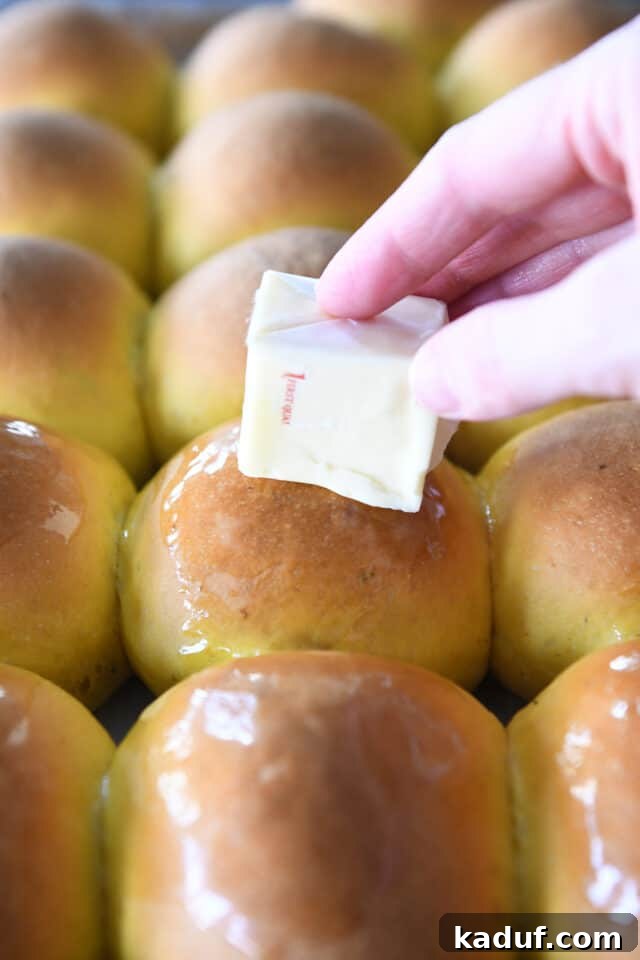
The moment these warm, golden rolls emerge from the oven, they demand to be buttered. And generously so! Don’t overthink it; there’s no need for elaborate techniques. You can simply slice off a chunk of butter and, holding the papered end, rub it directly over the hot tops of the rolls. The residual heat will melt the butter beautifully, creating a glossy, rich finish. Alternatively, melted butter applied with a pastry brush works just as well. The key is to get that butter, and plenty of it, onto those rolls as soon as they are out of the oven. This locks in moisture, adds flavor, and creates an even softer crust.
For an extra flourish, consider sprinkling the warm, buttered rolls with a delicate touch of sea salt and/or a few more finely chopped fresh rosemary leaves. This enhances both the flavor and visual appeal, offering a pleasant textural contrast and an intensified aromatic experience.
If your goal is to elevate your homemade bread-making skills and impress your family and friends, these fluffy pumpkin rosemary dinner rolls are undoubtedly the answer. Their exquisite flavor and unparalleled soft, fluffy texture make them truly special.
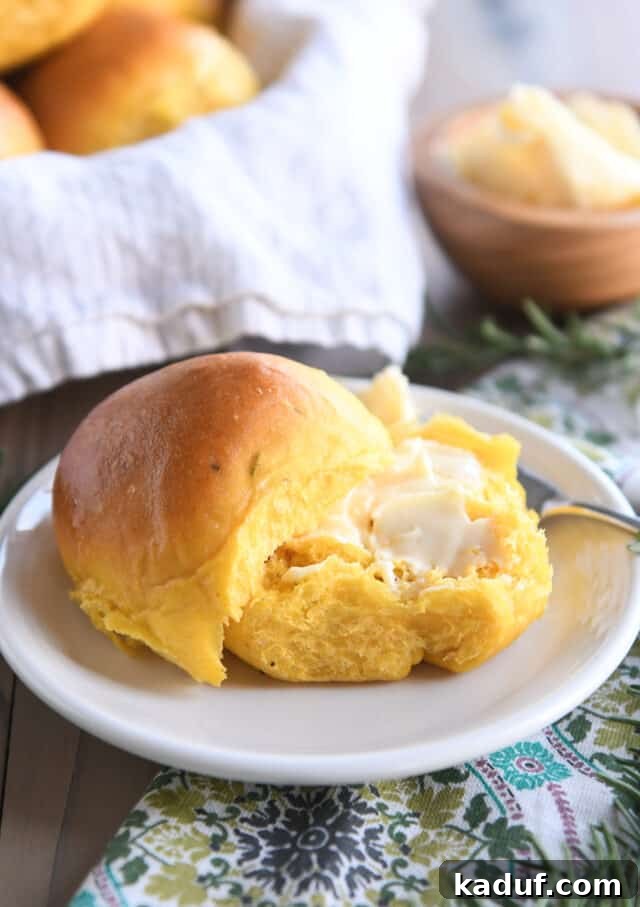
These rolls are not just perfect for grand holiday meals – imagine them gracing your Thanksgiving or Christmas table – but they are also wonderfully versatile for everyday enjoyment. Serve them alongside a hearty bowl of soup, a crisp salad, or as a delightful accompaniment to any dinner that could use the comforting touch of homemade bread. In my opinion, that includes almost every meal! The tender crumb and rich flavor are simply addictive.
I can already envision the ultimate leftover meal: these rolls, sliced open and generously filled with tangy mustard, succulent leftover turkey, and a slice of sharp white cheddar cheese. It’s my absolute go-to after Thanksgiving, a perfect sandwich to savor for days. This recipe promises not just a delicious meal, but also cherished culinary memories.
One Year Ago: Black Bottom Banana Coconut Cream Pie
Two Years Ago: Pressure Cooker Lasagna Soup {+ Stovetop Directions}
Three Years Ago: Delicious Cranberry Pear Crumble
Four Years Ago: Buttery, Flaky Make-Ahead Overnight Crescent Dinner Rolls
Five Years Ago: Chocolate Chip Cookie Pie
Six Years Ago: Slow Cooker Creamy Chicken and Wild Rice Soup
Seven Years Ago: Buttermilk Potato Rolls {Fluffiest Most Delicious Rolls I’ve Ever Met}
Eight Years Ago: Healthy Applesauce Carrot Muffins {a.k.a. Carrot Cake Muffins}
Nine Years Ago: Whole Wheat Blender Pancakes
Ten Years Ago: New York-Style Crumb Cake
Pumpkin Rosemary Dinner Rolls
Ingredients
- 1 cup pumpkin puree, canned or homemade, warmed (see note)
- ¾ cup warm water
- ⅓ cup melted butter or oil
- ⅓ cup granulated sugar
- 2 large eggs
- 1-2 tablespoons finely chopped fresh rosemary (see note about leaving out)
- 1 tablespoon instant yeast (see note)
- 2 teaspoons salt
- 5 1/2-6 cups all-purpose flour (see note)
Instructions
-
In the bowl of a stand mixer fitted with the dough hook, combine the pumpkin puree, warm water, melted butter or oil, granulated sugar, eggs, chopped rosemary, instant yeast, and salt. Mix these ingredients thoroughly until well combined.
-
Add 2 cups of the all-purpose flour to the mixture and mix until just incorporated. With the mixer running on low speed, gradually add the remaining flour, half a cup at a time, until a soft dough begins to form. The precise amount of flour will vary, so assess the dough’s texture: it should be soft and slightly tacky to the touch, yet capable of forming a ball and clearing the sides of the mixing bowl. Add more flour as necessary, being careful not to over-flour.
-
Increase the mixer speed to medium-low and knead the dough for 5-6 minutes. This develops the gluten, crucial for the rolls’ fluffy texture.
-
Allow the dough to rise until it has doubled in volume. This typically takes 1-2 hours. You can either leave the dough in the mixer bowl, covered with plastic wrap or a clean kitchen towel, or transfer it to a lightly greased bowl, also covered.
-
While the dough rises, prepare a half-sheet pan by lining it with parchment paper. Lightly grease the parchment paper with cooking spray to prevent sticking.
-
Once the dough has doubled, gently punch it down to deflate. Divide the dough into approximately 20 equal pieces (about 2.5 ounces each is a good guideline). Roll each piece into a smooth, tight ball. Arrange the shaped rolls on your prepared baking sheet, spacing them about 1/2-inch apart. Cover the rolls again and let them rise for a second time until they have doubled in size and appear noticeably puffy, another 1-2 hours.
-
Preheat your oven to 375 degrees F (190 degrees C). Position an oven rack in the center or slightly above center. Bake the rolls for 18-22 minutes, or until they are beautifully golden brown on top. Remove them from the oven immediately and, while still warm, generously brush the tops with butter.
Notes
Rosemary: For a delightful plain pumpkin dinner roll, feel free to omit the rosemary entirely. If you’re considering using dried rosemary as a substitute for fresh, please note that the flavor will not be as vibrant or pronounced. Fresh rosemary is highly recommended for the full aromatic experience.
Yeast: If you only have active dry yeast instead of instant yeast, you can still make these rolls. Simply proof the same amount of active dry yeast in 1/4 cup of warm water with a pinch of sugar. Let it sit for 5-10 minutes until it becomes foamy and bubbling, indicating it’s active. Remember to reduce the total water in the main recipe by 1/4 cup to account for the water used in proofing.
Pumpkin: To ensure optimal dough consistency, I recommend warming the pumpkin puree slightly. After measuring your water and oil, you can spoon the pumpkin puree into the same liquid measuring cup and microwave it for 20-25 seconds until it’s just lightly warm. Due to the presence of pumpkin in the dough, these rolls tend to rise a bit slower than other yeast doughs. To expedite the rising process, place the dough in a warm spot in your kitchen or in a slightly warmed oven (no more than 125 degrees F).
Recommended Products
Recipe Source: This recipe is a delightful adaptation of an original creation, thoughtfully shared by a reader named Loretta – a huge thank you to Loretta! Our adaptation involved several key modifications, including omitting milk, increasing the water content, adjusting the quantities of yeast and rosemary, and refining the mixing method, among other subtle changes to perfect the fluffy texture and balanced flavor.